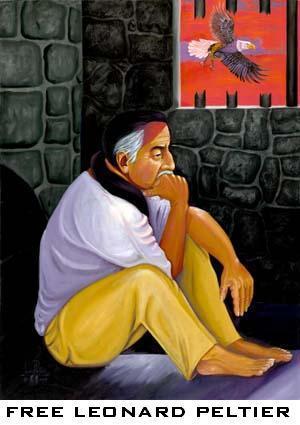
THIS BLOG is NOW RETIRED

I began this blog in May 2009 following the death of Marcia Powell at Perryville State Prison in Goodyear, Arizona. It is not intended to prescribe the path that leads to freedom from the prison industrial complex.

Rather, these are just my observations in arguably the most racist, fascist, militaristic state in the nation at a critical time in history for a number of intersecting liberation movements. From Indigenous resistance to genocidal practices, to the fight over laws like SB1070 and the ban on Ethnic Studies, Arizona is at the center of many battles for human rights, and thus the struggle for prison abolition as well - for none are free until all are. I retired the blog in APRIL 2013.

Visit me now at Arizona Prison Watch or Survivors of Prison Violence-AZ
BLOG POSTS
Showing posts with label slavery. Show all posts

Tuesday, June 28, 2011

Wal Mart, Women's Resistance, and Martori Farms


I've posted here and there already about Martori Farms and the news I was receiving from Perryville prisoners regarding the work conditions, but Vikki Law managed to unpack it, put it all into the larger context of women's resistance, and make sense of the women's complaints in a way I hadn't quite been able to. So, for those of you interested in the Martori Farms prison labor situation here in Aguila, Arizona, this is the best summary we have of it.

If you're interested in doing some organizing around these issues, please contact Vikki Law, as she's picking up the slack on this while I'm out with family matters. Vikki compiles the zine Tenacious for women prisoners, and can be reached at:


Victoria Law

PO Box 20388
Tompkins Square Station
New York, NY 10009

or e-mail: vikkimL@yahoo.com

She's on-line at her blog: Resistance Behind Bars, and you can order her book about women's resistance to the prison industrial complex through PM Press. Thanks again for this, Vikki...and to Truth-out for putting it up there.

------------------------

Martori Farms: Abusive Conditions at a Key Wal-Mart Supplier

Friday 24 June 2011
by: Victoria Law
Truthout | News Analysis

(Photo: Walmart / Flickr)

In 1954, an 18-year-old black woman named Eleanor Rush was incarcerated at the state women's prison. She was placed in solitary confinement for six days.

On the seventh day, Rush was not fed for over 16 hours. After 16 hours, she began yelling that she was hungry and wanted food. In response, the guards bound and gagged her, dislocating her neck in the process.

Half an hour later, Rush was dead.

The next morning, when the other women in the prison gathered in the yard, another woman in the solitary confinement unit yelled the news about Rush's death from her window. The women in the yard surrounded the staff members supervising their activities and demanded answers about Rush's death. When they didn't get them, the women - both the black and the white women - rioted.

The riot lasted three and a half hours, not stopping until Raleigh, North Carolina, police and guards from the men's Central Prison arrived.

The women's riot brought outside attention to Rush's death. As a result:

  • The State Bureau of Investigation ordered a probe into Rush's death rather than believing the prison's explanation that Rush had dislocated her own neck and committed suicide.
  • Until that point, nothing in the prison rules explicitly prohibited the use of improvised gags. After the riot and probe, the State Prisons director explicitly banned the use of gags and iron claws (metal handcuffs that can squeeze tightly).
  • The prison administration was required to pay $3,000 to Rush's mother. At that time, $3,000 was more than half the yearly salary of the prison warden.
  • The prison warden, who had allowed Rush to be bound and gagged, was replaced by Elizabeth McCubbin, the executive director of the Family and Children's Service Agency. Her hiring indicated a shift from a punitive model toward a more social service/social work orientation.

The women themselves testified that they had rioted to ensure that Rush's death was not dismissed and that the circumstances would not be repeated.

Fifty-five years after Rush was killed in solitary confinement, Marcia Powell, a mentally ill 48-year-old woman incarcerated at the Perryville Unit in Arizona, died. The Arizona Department of Corrections (ADC) has more than 600 of these outdoor cages where prisoners are placed to confine or restrict their movement or to hold them while awaiting medical appointments, work, education, or treatment programs. On May 20, 2009, the temperature was 107 degrees. Powell was placed in an unshaded cage in the prison yard. Although prison policy states that "water shall be continuously available" to caged prisoners and that they should be in the cage for "no more than two consecutive hours," guards continually denied her water and kept her in the cage for four hours. Powell collapsed of heat stroke, was sent to West Valley Hospital where ADC Director Charles Ryan took her off life support hours later.

The ensuing media attention over Powell's death caused the ADC to temporarily suspend using these cages. Once the media attention faded, the ADC lifted the suspension.(1)


Abuses at Perryville have continued. The ADC has sent its prisoners to work for private agricultural businesses for almost 20 years.(2) The farm pays its imprisoned laborers two dollars per hour, not including the travel time to and from the farm. Women on the Perryville Unit are assigned to Martori Farms, an Arizona farm corporation that supplies fresh fruits and vegetables to vendors across the United States (Martori is the exclusive supplier to Wal-Mart's 2,470 Supercenter and Neighborhood Market stores).(3) According to one woman who worked on the farm crews:

They wake us up between 2:30 and three AM and KICK US OUT of our housing unit by 3:30AM. We get fed at four AM. Our work supervisors show up between 5AM and 8AM. Then it's an hour to a one and a half hour drive to the job site. Then we work eight hours regardless of conditions .... We work in the fields hoeing weeds and thinning plants ... Currently we are forced to work in the blazing sun for eight hours. We run out of water several times a day. We ran out of sunscreen several times a week. They don't check medical backgrounds or ages before they pull women for these jobs. Many of us cannot do it! If we stop working and sit on the bus or even just take an unauthorized break we get a MAJOR ticket which takes away our "good time"!!!

We are told we get "two" 15 min breaks and a half hour lunch like a normal job but it's more like 10 minutes and 20 minutes. They constantly yell at us we are too slow and to speed up because we are costing $150 an acre in labor and that's not acceptable.

The place is infested with spiders of all types, scorpions, snakes and blood suckers. And bees because they harvest them. On my crew alone, there are four women with bee allergies, but they don't care!! There are NO epinephrine pens on site to SAVE them if stung.

There's no anti venom available for snake bites and they want us to use Windex (yes glass cleaner) for scorpion stings!! INSANITY!!! They are denying us medical care here.(4)

Although Martori Farms contracts with the local fire departments to provide medical attention for injuries on the farm, farm supervisors do not always allow women to stop work when they need medical care. When "N" complained of chest pains, the farm representative refused to allow her to stop working. The next day, an hour after returning to work, she began experiencing chest pains. The farm representative told her, "Come on, the big bosses are here. You'll be in trouble if you stop. It's not break time. Work, work, work." "N" complied, working while in pain, until the break. She resumed working for another half hour before she experienced even more severe pains: "I have a steady deep dull pain with sharp stabbing pains periodically ... Then all of a sudden, I can't even lift the hoe in the air. My arms are no longer strong enough. By now, the chest pains are so bad it's knocking the wind out of me. I'm straight seeing stars. I tell our substitute boss officer Sanders I can't do it no more. I'm having really bad chest pains. I can't even lift the hoe anymore." The man accused her of faking these pains, but allowed her to stop working. While the woman was receiving medical attention, another farm representative stated, "Oh, so now they're gonna start faking fucking heart attacks to not work. Great."(5)

In addition, the prison has sent women to work on the farms regardless of their medical conditions. "N" was sent to West Valley Hospital where an emergency room doctor ordered that she be exempt from the farm work crew and any other physical exertion for three to four days. However, when "N" was returned to the prison, the nurse told her that they could not honor the doctor's order and ordered her back to work.

Another woman concurs. "There was one woman that is on oxygen, in a wheelchair, has an IV line and cancer that they sent to the gate to work on the farm ... The captain asked if she could stand. She said yes. His reply was if you can stand, you can farm. She told him no and was issued a disciplinary ticket."(6)

The women have not accepted these abuses quietly. They have launched complaints to prison administrators:

"Women have made their complaints on inmate letters and verbally to the lieutenant, sergeant, captains, deputy warden, counselors, supervisors and the major. Their solution was to give us an extra sack lunch and agree to feed us breakfast Saturday mornings. UGH!! Really ... food is not what we were asking for. Though being fed on Saturdays is nice. Yah! They were not feeding us Saturdays because that's a day Kitchen opens late because they give brunch on weekends. No lunch, so we were getting screwed! But as of this past Saturday they said they would feed us before work! Let's see how long it lasts."

Women have also stood up to unfair demands from the bosses at the farm. One woman recounted:

On Wednesday I go to work ... it's the second day in a row we are doing weeds. [I'm] up to my chest trying to weed to save a minimal amount of watermelon plants. Needless to say, the work was excessively hard - to put it mildly. So I must confess the day before I was "on one," so to speak. My haunted mind was lost in the past and so I was just trucking through the weeds, plowing them down, not even connecting with my physical exertion and pain. So the next day I was completely exhausted and physically broke down!! I was in so much pain because the day before I did like double the work everyone else did. So anyways, the M Farm representative was pushing me so hard trying to get me to produce the same results as the day before ... [He] has everyone at minimum teamed up helping each other plow through these weeds. Well everyone but me that is. I repeatedly asked him to give me a partner. I kept telling him that I was in pain. I also went as far as to tell him that I don't think I can do this anymore, to PLEASE give me a partner also. His response was "No. You're strong. You can do it by yourself." I told him not true; I over-exerted myself yesterday because I was going through some things. Now I'm hurt and need help.... He thought my pleas were funny. I hated to degrade myself and plea so I stopped and continued.

After "N" had finished her assigned row, the farm representative demanded that she finish weeding two other rows that had been abandoned. When she again requested a weeding partner, stating that she was in pain, the representative replied, "When you get to the end, I'll think about it."

By this time, all the girls are finishing their rows because they're all teamed up with 2 or three girls per row. Except me. So there are only two whole rows left on the field by now and he already placed six girls per row. That's twelve women on two rows. And I can't even get one helper. That's RIDICULOUS ... I tell him "Mariano all joking aside, all the others are finishing. Can I please get a helper?" He tells me "Seriously, no joking. When you get to the end, I'll think about it." At that point I'm pretty upset and broke down. I looked at him and said "Is that right?" I paused staring at him waiting for him to stop his male chauvinist domination games or whatever he's playing. When he didn't say anything, but just stared. I told him, "Fine Mariano I'm done. I can't do this anymore. I'm hurt and struggling through this. After what happened to me before I would think you would provide me help when I need it. Since you won't look out for my health and well-being, I will. Someone has to. I'm done for today. I'm going to sit on the bus."

The supervisor demanded that she return to work, threatening to call the prison to have disciplinary tickets written up. She refused.

At this point I'm so angry that this jerk would make me lose everything because I'm not submissive and I don't obey him like the women back in Mexico do that I admit I blew up and acted unprofessional. I told him "Mariano, Fuck you and your tickets. Go write them if you want. In fact I'll write them for you to make sure you get the facts straight."...

At this point the two women who were on the bus got all riled up and were yelling, "That's not fair. She's your best worker and you're going to punish her with tickets!!!" "She's hurt I heard her asking for help all day!" "We've been sitting on the bus for over an hour and we're not getting tickets, why is she the only one getting a ticket?"(7)

Not only did "N" stand up for herself, but the other women defended her actions at the risk of being ticketed as well. Their combined efforts ensured that "N" was not issued a ticket in retaliation for standing up for herself.

Women have also alerted outside advocates and activists about these inhumane conditions, again at great risk to themselves. If not for their courage in speaking out, the outside world would remain unaware of the exploitation and abuse on the farm.

While the women both endure and challenge these abuses, those outside prison gates remain largely unaware of their struggles. Those involved in social justice organizing need to recognize that prisons and prison injustices are exacerbations of the same social issues in the outside world and recognize that these struggles intersect. Safe from the retaliation of prison authorities, outside organizers and activists can and should raise their voices and take action to help the women inside challenge and ultimately stop these abuses.

Footnotes:

1. As of April 15, 2010, these cages (or "temporary holding enclosures") remain in use. Arizona Department of Corrections, Department Order Manual, Department Order 704: Inmate Regulations.

2. Nicole Hill, "With Fewer Migrant Workers, Farmers Turn to Prison Labor," Christian Science Monitor, August 22, 2007. Reprinted here.

3. Press release, "16-Year Relationship Between Wal-Mart and Arizona Business Grows, Thrives," September 7, 2007. The 2470 figure is as of August 1, 2007.

4. Letter from "N," dated April 24, 2011.

5. Letter from "N," dated April 24, 2011

6. Letter from "H," dated May 22, 2011.

7. Letter from "N," dated May 7, 2011.

Sunday, August 15, 2010

War on Drugs, War on us: America's Prison Industrial Complex.

Good video on the prison industrial complex. Close look at Mississippi and private prisons about six minutes in. They also echo my concern that private prisons benefit too much from "crime", not from investments in things like public education.

------------------------------


Watch this video on VideoSurf or see more Profit Videos or Freedom Videos

Friday, July 16, 2010

Slave Ships on Dry Land: Understanding prison abolitionism.

A friend's Spacebook page led me to this somehow - these women do an awesome job of explaining prison abolition and the whole history of the prison industrial complex, which has its roots, of course, in capitalism, racism, and slavery. This actually came off of Indybay, but it's a reprint from the Angola 3 News - send them some support - they do great stuff!

------------------------------------


"To be an abolitionist is just that – to strive to create and rediscover alternatives to incarceration, to find solution to "crime" that restores communities rather than decimates them, it is to ask the difficult questions that push us to imagine an end to the reliance on the prison and related retributive sanctions. To say, yes, that prisons are obsolete."
oicslaves.jpg
oicslaves.jpg


Abolishing the Prison Industrial Complex

--Part one of an interview with Criminal Injustice Kos co-editors Nancy Heitzeg and Kay Whitlock


By Angola 3 News


Focusing on the prison abolitionist movement, we interview two co-editors of an exciting new series at Daily Kos, called Criminal InJustice Kos (http://www.criminal-injustice-kos.dailykos.com), a weekly series "devoted to exploring the myths of 'crime', 'criminals', and criminal justice and the intersection of race/ethnicity/class/gender/sexuality/age/disability in policing and punishment. Criminal Injustice Kos is committed to furthering action towards reducing inequity in the US criminal justice system." Look for Criminal InJustice Kos every Wednesday at 6 pm CST.


Stay tuned for part 2, where we focus on the practicality of prison abolition and take a close look at alternatives to the US prison system.


Dr. Nancy Heitzeg (whose online name is “soothsayer99”) is an activist educator and Professor of Sociology and Co-Director of the interdisciplinary Critical Studies of Race/Ethnicity program at Saint Catherine University. She has written and presented widely on the subjects of race, class, gender and social control. Nancy is the author of Deviance: Rule-makers and Rule-breakers, and several articles exploring issue of race class gender and social control including: "Differentials in Deviance: Race, Class, Gender and Age" (in The International Handbook of Deviant Behavior, Routledge, forthcoming Summer 2010); "The Case Against Prison: in Prison Privatization: The State of Theory and Practice (forthcoming Fall 2010), "Education Not Incarceration: Interrupting the School to Prison Pipeline"(Forum on Public Policy, Oxford University Press, Winter 2010); "The Racialization of Crime and Punishment: Criminal Justice, Color-Blind Racism and the Political Economy of the Prison Industrial Complex"(with Dr. Rose Brewer, which appeared in a special volume co-edited by Dr. Heitzeg and Dr. Rodney Coates, of American Behavioral Scientist: Micro-Level Social Justice Projects, Pedagogy, and Democratic Movements, Winter 2008); and Race, Class and Legal Risk in the United States: Youth of Color and Colluding Systems of Social Control" (Forum on Public Policy, Oxford University Press, Winter 2009).
Be sure to read our earlier two-part interview with Heitzeg, published by Truthout, part one: Visiting a Modern Day Slave Plantation and part two: The Racialization of Crime and Punishment.


Kay Whitlock (whose online name is “RadioGirl”) is a Montana-based writer, organizer, and activist long engaged in progressive struggles for racial, gender, queer, environmental, and economic justice. She has written extensively on the intersection of race, gender, sexuality, and class in relation to police and prison violence, most notably in her former position as National Representative for LGBT Issues for the American Friends Service Committee (AFSC), a Quaker organization. Her publications for AFSC include Corrupting Justice: A Primer for LGBT Communities on Racism, Violence, Human Degradation & the Prison Industrial Complex (pdf download and In a Time of Broken Bones: A Call to Dialogue on Hate Violence and the Limitations of Hate Crimes Legislation (pdf download). With Joey L. Mogul and Andrea J. Ritchie, she is the co-author of Queer (In)Justice: The Criminalization of LGBT People in the United States, forthcoming from Beacon Press in February 2011 – an analysis of queer criminalization, centering race, class, and gender, from colonial contact to the present.


Angola 3 News: Why do you consider yourself a prison abolitionist? What does this term mean for you?


Nancy Heitzeg: If one accepts, as I do, that prisons in the US are a contemporary extension of chattel slavery, that prisons are irredeemably rooted in racism and classism that prisons serve no purpose save corporate profit and raw retribution, then one must call for their abolition. Prison “reform” is insufficient if the very notion and reality of prison itself is grounded in inequality, injustice and destruction.


In a small yet dense book, Angela Davis asks Are Prisons Obsolete??? If prisons are indeed social structures rooted in racism, classism and fear – then we must take the questions seriously. We must try to imagine a nation – perhaps a world without prisons.


"As important as reforms may be, frameworks that rely exclusively on reforms help to produce the stultifying idea that nothing lies beyond the prison...We must give serious consideration to abolitionist strategies to dismantle the prison system...which preserves existing structures of racism as well as creates new ones...this is no more outlandish than the fact that race and economic status play more prominent roles in shaping the practices of social punishment than does crime." (Davis 1998 105)


I have always known people who were in prison and or known of others who were. I have always thought about prison. "Letter from A Birmingham Jail", Blood in My Eye, The Ten - Point Program of the Black Panther Party, The Attica Prison Uprising, and Free Leonard Peltier! all shaped my political consciousness from the youngest of ages. I have always studied the prison -- even though my area of graduate study and expertise was more broadly focused on deviance and all aspects of social control - formal medical and informal, the prison and correspondingly the death penalty always loomed as the sanction of last resort – the punishment fit for those who were to be most "feared" who represented at least in theory, the most dangerous of all rule-breakers. And soon it became comparatively clear that the definition and control of deviance was more closely linked to WHO the deviant was rather WHAT the deviant did. Some murderers were never arrested, others merely fined, and still others were imprisoned or executed. Same with all the rest: the robbers the assaulters the thieves the dealers of drugs and so on. Far from being mutually exclusive or race and class blind, systems of control are inter-dependent and over-lapping, and discretion often is shaped by discrimination. You can not be an honest scholar of the sociology of deviance without also being a scholar of social inequality – of race class gender sexual orientation and age.


Race, class and gender are inextricably bound up with the definition and control of deviance. To the extent that the privileged and empowered "norm" is white, male, financially well off, heterosexual and adult, then people of color, women, the poor, GLBTQ persons, and the young become "the Other", the "abnormal", the "deviant". Further, these "Others" have been subject to labeling and social control based on the intersection of race, class, gender and other differences. The "matrix of domination" shapes access to systems of social control as well as to social opportunity. And, while there are "deviants" of all classes, all races, all genders and ages, the models under which they are controlled reflect their relative social status. It became clear that prison was not really for the "worst" of all offenders because corporate white-collar crime is responsible for a least 5 times more deaths each year and 10x more money lost than so-called street crime. Prison was a place for the poor, the black/brown, the young – it was meant for those "others" we were lead to fear most.


So the prison is a site where justice was not served but where injustice was further re-inscribed, a place where punishment often does not fit the crime if there indeed was one, a place where social inequality was both the precursor and the antecedent. The prison is for me — with the many who write from within the walls – a site of resistance.


To be an abolitionist is just that – to strive to create and rediscover alternatives to incarceration, to find solution to "crime" that restores communities rather than decimates them, it is to ask the difficult questions that push us to imagine an end to the reliance on the prison and related retributive sanctions. To say, yes, that prisons are obsolete.


Kay Whitlock: I never set out to be an abolitionist, but that’s where my journey inevitably led me (it is described in more detail in my essay "The Long Shadow of Prison: My Messy Journey Through Fear, Silence, and Racism Toward Abolition," which appears in Interrupted Life: Experiences of Incarcerated Women in the United States, edited by Solinger, Johnson, Raimon, Reynolds, and Tapia. There was no single grand moment of sudden political revelation – "AHA!" I didn’t grow up in a liberal household; I was a white, working-class kid in a community where racism was fierce and, for many years, unchallenged. My journey took many years; it was marked by the never-ending accumulation of terrible facts and detail that illuminated the hydra-headed nature of the prison system and mass incarceration. That includes the obvious use of imprisonment historically to control people of color and poor people; horrific exploitation of prison labor; the too-limited, cramped, and ultimately false promises of "rehabilitation"; disenfranchisement of millions of people – mostly people of color – with felony convictions; endemic violence, use of torture, and abuse of human rights in U.S. jails and prisons; and the expansion of prison profiteering.


In the face of this accumulation of knowledge, I had a choice. Either I would have to close my heart and mind, or I would have to face these truths head on, and make a decision in line with my conscience, ethics, and spiritual belief (I am a Buddhist practitioner).


Really, it’s as simple as that. If you know about mass violence and injustice, do you turn away, making justifications for your silence and indifference? Or do you act on what you know of the systemic hell of the U.S. incarceration system and how the misery it produces corrupts and harms every aspect of U.S. society? And, particularly relevant for me, when you’re a white person and consider yourself anti-racist, what do you do about the evil of mass incarceration?
In my view, the role and reach of prisons in U.S. life constitutes one of the greatest moral crises of our age. To me, declaring myself an abolitionist means that:


• I am part of a growing, diverse, movement that seeks not only to abolish the institution of the prison in the United States, but also dismantle the confluence of public, private, political, and economic interests called "the prison industrial complex."


• over the years, I have come to see more and more clearly the ways in which the U.S. prison system is foundationally, fundamentally, and violently racist; it has been from the very beginning. Because I care passionately about dismantling racism and white privilege in this country, the abolition of the prison system seems to me an essential part of the struggle.


• I have come to see that human rights abuses and torture within U.S. prisons is normative, not a "bad apple" departure from the norm.


• I do not accept our society’s increasing utilization of prisons to reinforce racism; to criminalize mental illness; to police and punish the very poverty it has created; to avoid coming to terms with a shattered public education system; and to police and punish sexual and gender nonconformity.


• in my view, only the call to abolition opens up sufficient creative and imaginative public space in which to think about what authentic justice might look like if the concepts of justice for all, community well being, and universal human rights were at the center of our vision addressing the understandable yearning for safety and security. Otherwise, we will simply accept the inevitability of prisons and never fundamentally challenge their nature, reach, and function in this country.


A3N: How does today’s prison abolitionist movement related to the movement to abolish slavery in the pre-U.S. Civil war period? What is the legacy of pre-Civil War black chattel slavery on today’s prison-industrial complex?


NH: The term abolitionist is a direct reference to the movement to abolish slavery. Again in Are Prisons Obsolete???, Davis argues that the prison industrial complex is indeed the new plantation – the latest in a series of historically uninterrupted efforts to legally and economically suppress blacks. As slavery inspired the abolition movement and Jim Crow segregation/extra-legal lynching inspired he Civil Rights Movement, so too the prison industrial complex must be resisted by new abolitionists.


And yes we can draw a direct link from slavery to the prison industrial complex. In the South especially, there is really no difference but the name in places like LSP Angola , an old plantation which immediately was transformed in to a penitentiary after the Civil War.


The abolition of slavery did not result in the abolition of legitimated white supremacy in the law; it merely called for new methods of legally upholding the property interests of whiteness. The criminal justice system begins to play a new and crucial role here. There was a subsequent transformation of the Slave Codes into the Black Codes and the plantations into prisons. Following Reconstruction, the rights extended to blacks via the 13th, 14th, and 15th Amendments were quickly subverted by laws and Supreme Court rulings that upheld racism. Laws were quickly passed that echoed the restrictions associated with slavery, and criminalized a range of activities of the perpetrator was black. The newly acquired 15th Amendment right to vote was curtailed by tailoring of felony disenfranchisement laws to include crimes that were supposedly more frequently committed by blacks. And, the liberatory promise of the 13th Amendment – "Neither slavery nor involuntary servitude shall exist in the United States"- contained a dangerous loophole- "except as a punishment for crime" This allowed for the conversion of the old plantations to penitentiaries, and this, with the introduction of the convict lease system permitted the South to continue to economically benefit from the unpaid labor of blacks. This practice in combination with a brutal convict lease system in many southern states effectively allowed for the perpetuation of slavery -- just by another name.


Following the end of legalized racial discrimination, there was an especially concerted effort to escalate the control of African Americans via the criminal justice system.


Marable (1983:120-121 makes this point, "...white racists began to rely almost exclusively on the state apparatus to carry put the battle for white supremacy...The criminal justice system became, in short, a modern instrument to perpetuate white hegemony."


These practices gain primacy during the post-Civil Rights years as the criminal justice system provides a convenient vehicle for physically maintaining the old legally enforced color-lines as African Americans are disproportionately policed, prosecuted, convicted, disenfranchised and imprisoned. The criminal justice system and its’ culmination in the prison industrial complex also continues to guarantee the perpetual profits from the forced labor of inmates, now justifying their slavery as punishment for crime. Finally, the reliance on the criminal system provides the color-blind racist regime the perfect set of codes to describe racialized patterns of alleged crime and actual punishment without ever referring to race.


As Angela Davis (1997:62) observes, ""Crime is one of the masquerades behind which "race", with all its menacing ideological complexity, mobilizes old public ears and creates new ones."


The current racial dynamic of the prison industrial complex bears this out. Mandatory minimums for drug violations, "three strikes", increased use of imprisonment as a sentencing option, lengthy prison terms, adult certification for juveniles and the expanded use of the death penalty -- all disproportionately affect the poor and people of color. A brief glimpse into the statistics immediately reveals both the magnitude of these policy changes as well as their racial dynamic. Despite no statistical differences in rates of offending, the poor, the under-educated, and people of color, particularly African Americans, are over-represented in these statistics at every phase of the criminal justice system. While 1 in 31 adults is under correctional supervision and 1 in every 100 adults is in prison, 1 in every 100 black women 1 in every 36 Latino adults , one in every 15 black men, and 1 in 9 black men ages 20 to 34 are incarceration. Approximately 50% of all prisoners are black, 30% are white and 1/6 Latino .Race of victim race of offender and social class remain the best predictors of who will receive the death penalty


The racial disparities are even greater for youth. African Americans, while representing 17% of the youth population, account for 45% of all juvenile arrests. Black youth are 2 times more likely than white youth to be arrested, to be referred to juvenile court, to be formally processed and adjudicated as delinquent or referred to the adult criminal justice system, and they are 3 times more likely than white youth to be sentenced to out-of –home residential placement Nationally, 1 in 3 Black and 1 in 6 Latino boys born in 2001 are at risk of imprisonment during their lifetime. While boys are five times as likely to be incarcerated as girls, girls are at increasing risk. This rate of incarceration is endangering children at younger and younger ages.


KW: There is a clear and dreadful line of continuity connecting the institution of chattel slavery and policies and public/private interests supporting mass incarceration. Examine the Slave Codes and then the post-slavery Black Codes to see how readily "emancipation" morphed into "criminalization." Legal segregation followed; today, the racial impact of "get tough on crime" and the expansion of the prison industrial complex continue that direct line. (I want to note, too, that federal, state, and territorial laws criminalized traditional American Indian cultures and daily life. Luana Ross powerfully addresses this in her book, Inventing the Savage: The Social Construction of Native American Criminality. The criminalization of immigrants, today particularly immigrants of color, deserves our attention.)


But so many people – I would certainly guess most white people – in this country are neither aware of these facts nor particularly want to know them because they shake up our tendency to want to believe that systemic racism is either gone or well on the run. In my work, I meet countless people who believe that that slavery is a relic of the past; that black people should just "get over it" and "move on." There is enormous resistance to learning about and recognizing just how the prison-industrial complex works in our society – and how low-income people of color provide the bodies that produce the profits for the incarceration industry.


In my work, I am particularly intrigued with the amount of anger so often directed at anyone who raises these questions – even anger from much of the liberal-left, particularly white folks. The depth of that anger, the depth of refusal to engage these historical and contemporary facts tells me that we’re dealing with enormous fear here. Racial fear; Racism. In many cases, that racism is not intentional; it certainly is unexamined. But nonetheless it is always there, at the very heart of things. Abolition discussions pull the rug out from under the cozy fiction that we actually are entering a post-racial phase in U.S. history and give lie to the comforting bromide that slavery is behind us.


In many respects, I believe that contemporary abolition discussions mine the mother lode of racism in the United States.


A3N: What do you think are common public misperceptions of the abolitionist movement? What roles do mainstream educational institutions and the corporate media play in creating these misperceptions? How can abolitionists best confront these misperceptions and constructively engage the general population?


NH: We must confront false assumptions and stereotypes that are fueled by media. The fears that lead to excessive prisonization are fueled by public misperceptions of crime...A substantial body of research documents the role of media - especially television – in constructing perceptions of crime, public images of the criminal, and subsequently shaping public policy.


Of particular note is media- generated hysteria of the 1980s and 1990s that inextricably linked and over-inflated "teen super-predators", inflated accounts of gang-violence and the crack cocaine "epidemic" -- all were unmistakably characterized as issues of race.


As Walker Spohn and DeLone note:


"Our perceptions of crimes are shaped to a large extent by the highly publicized crimes featured on the nightly news and sensationalized in news papers. We read about young African American and Hispanic males who sexually assault, rob and murder whites, and we assume that these crimes are typical. We assume that the typical crime is a violent crime, that the typical victim is white, and that the typical offender is African American or Hispanic."


The TV world of crime and criminals, however, is an illusion. These assumptions are false.


The reality of crime is very different from what media images suggest. An examination of official statistics (gathered annually by the F.BI. and U.S. Department of Justice and published in Uniform Crime Reports) presents data that is the exact opposite of what media presents to us.


The reality of crime is this: most crime is undetected/unreported, that which is related to property; rates for all crime are declining; the "typical" offender for all crimes is white; the "typical" victim is African American; and crime tends to be an intra-group event. Countering these media myths of crime with the truth – whenever and wherever we can – is first and essential task of abolitionists.


KW: Well, it seems important to first underscore how mainstream media – now almost wholly corporate controlled – helps to demonize prisoners, typically downplays news about police misconduct and the systemic nature of prison violence, and promotes "get tough on crime" policies. In the hands of most media, crime becomes simply another commodity. The more sensational, lurid, horrific, and terrifying, the more profitable it is. About a dozen years ago, a guy named Steven M. Chermak did a study of crime reporting (Victims in the News: Crime and the American News Media 1995), and he found that over half the crime stories he looked at were primarily based on police and court records. Not surprising, but it limits not only the source filter, but also the perspective and information that might be available.


So the stories are framed almost entirely by arrest records, police reports, and hurried exchanges between prosecutors, police, and reporters. Now, that material may be incomplete, misleading, or inaccurate in whole or in part. But accuracy or the wholeness of the story doesn’t matter. That’s the narrative. The perspectives of victims – of some kinds of crimes – might be incorporated a little bit. But you can be pretty sure that the people already considered ‘criminal’ – whether they have been rightly charged or not; whether they have been convicted of a specific offense or not – are not going to be there in any meaningful way. Not even if they have been brutalized or mistreated within the criminal legal system. That’s not really a "crime." After all, don’t "criminals" deserve to be treated as scum? Aren’t they automatically less than human? And how often are the stories of people whose lives are shattered by corporate misconduct and exploitation centered in the reporting of corporate-controlled media? So there’s a profound bias in what stories we hear, and whose voices are heard from the beginning, framing the narrative.


We almost never hear the stories that are more complicated: how, for example, police often blame victims of "hate" or interpersonal violence for assaults against them – particularly if those victims are poor, people of color, and may be profiled as undocumented immigrants. We hear about prison rape as a gigantic, homophobic joke – and the image of gay men – so often framed as black in discourse about prisons as thugs, disease spreaders, rapists and sulliers of innocent, heterosexual white men (caution: link to racist and homophobic analysis) is reinforced, when in truth, incarcerated queers actually are disproportionately targeted for sexual violence. And there’s a thudding silence in the mainstream media surrounding the experiences of most people in prison.


It’s no surprise then that so many of us who don’t routinely have to deal with law enforcement violence end up with the false idea that most people in prison are irredeemably violent; that they are sadistic murderers and rapists. And that prison is the only line of safety that protects "us" from these alleged violent predators. We aren’t encouraged to think critically about the racial and class coding that typically goes into these images. No accident that the "revolving door" rapist image, promoted by supporters of the first Bush, then running against Dukakis for the presidency, was Willie Horton, a black man. White people, particularly, aren't encouraged to think of prisoners as members of our communities, as our neighbors. But for countless people of color, of course, prisoners are members not only of their communities, but also their families.
Today, of course, we’ve turned crime and policing into entertainment-rich "reality" shows on television (caution: this is an entertainment blog link). No question there who are the good guys and the bad guys. So we learn to consume demonized criminalizing images (pdf download) and police pursuit and mistreatment of those demonized "others" as both enjoyable and energizing. That is truly obscene.


I know from my own experience that many folks believe that we abolitionists are out of touch with the reality of violence and care more about "criminals" than "victims." That we are ready to loose hordes of psychotic, murdering rapists on the public because we don’t care about holding anyone accountable for the harms they do to others. In fact, we are viewed as eager to "excuse" their actions. Over time, many people have come to believe that only prisons keep us "safe" from violent others. And that to even question these myths is the same as an intentional attack on "victims of crime." I know from personal experience that many think we are "unrealistic" and know nothing about the devastation of violence and crime firsthand. So wrong – but it is such a prevalent belief.


The majority of people I know in the abolitionist movement – including myself – have experienced violence not only at the hands of individuals in the community – in families, schools, at home, on the streets - but also at the hands of police or prison officials. And I don’t know anyone who believes that any of this violence is unimportant or "excusable."


But we cannot just "counterattack" with our own demonizing narratives about law enforcement and those who disagree with us in order to challenge these perceptions. That just keeps the cycle going. I do believe we have to lay bare terrible truths about prison violence, but do so within frameworks that lift up the kinds of visions of community that we all hunger for. Unless there is something to fight for, and not just something to fight against, we will be on the defensive.


We also have to be willing to wrestle with difficult questions, not dodge them. Let's face it: there are some scary people who are exceptionally violent and not inclined – for whatever reasons – to change. They are relatively few, and we certainly shouldn't structure a whole policing/imprisonment system around them. But what do we do to help ensure that those few very violent folks won't keep harming others without just recreating the brutal system we have now?


And I think we have to deploy many tools in our struggle: facts and figures, yes, but also cultural means of humanizing the stories we have to tell. Most of all, we need to produce more cultural forms of imagination – poetry, visual art, video, theater, movies, dance, posters, novels, new media – that are powerful enough to even momentarily interrupt the fear that drives the anger that so often shuts down discussion.


We have to reach that emotional spot in people where they begin to recognize that they also have something to contribute to the story, and something profoundly important to gain from new approaches. We have to begin to deconstruct "us" and "them" in the general population, even as we seek to tell the truth about what happened– what is happening - and why. The story of how we got to this miserable state of affairs and what we can do to get out of it.


--Angola 3 News is a new project of the International Coalition to Free the Angola 3. Our website is http://www.angola3news.com where we provide the latest news about the Angola 3. We are also creating our own media projects, which spotlight the issues central to the story of the Angola 3, like racism, repression, prisons, human rights, solitary confinement as torture, and more.

Thursday, March 25, 2010

Scott Watch: They'd better stop messing with Mrs. Rasco's kids...

Celebrate the International Observation of the Anniversary of
the Abolition of the Transatlantic Slave Trade:

ABOLISH THE PRISON INDUSTRIAL COMPLEX!!
-----------------

This is pretty extraordinary, what's going on at MDOC. Kind of makes me feel grateful for Arizona.

Keeping both Jamie and her family ignorant of her condition seems to be medical malpractice, with malicious intent (the intent of compromising a patient's welfare to protect the welfare of an institution's image - that being the image Wexford and the MDOC want to project...). I just don't buy their assessments: why else do all these outside doctors disagree with them?

The Kidney Foundation could make such a difference in the quality of care Jamie's getting and the access her family has to her and her medical staff, with just a little diplomacy.


------------------

Subject: Jamie Scott Rushed Back To Prison So Mother Could Not Visit Hospital
3/25 SCOTT SISTERS UPDATE!

NOTE: If reading this before 10:00 a.m. EST or 9am CST on 3/25, please tune into http://www.facebook.com/l/c3cc4;www.wjzd.com for a Scott Sisters update from Mrs. Rasco on the Rip Daniels "It's a New Day" (http://www.facebook.com/l/ c3cc4;www.itisanewday.com) show. Rip Daniels is a very dedicated supporter who starts each show off at 10 a.m. daily counting down how long Jamie and Gladys have been wrongfully locked down and tormented in that prison and will even discuss the case during some mornings on his program, so please check in as regularly as you can.

Mrs. Rasco and her entire family are in Mississippi to visit Jamie and Gladys as well as to participate in the 3/26 MWM/BWDL Press Conference scheduled for 12 noon in front of the Jackson, MS Capitol Bldg. at 400 High St. The organization is asking for letters
of support for their campaign by 12 midnight 3/25 to be sent tonationalmwm@aol.com or officialmwm@yahoo.com For more info call: 267-636-3802.

Jamie has been in the hospital since 3/15 with a very serious infection, severe weakness, extreme pain and swelling. Jamie stated that she was "kicked out" of the hospital on Tuesday to prevent Mrs. Rasco from coming in and asking questions, in fact an extra guard was placed there to make certain that Mrs. Rasco didn't come in there to see her. Jamie told Mrs. Rasco that she couldn't believe how her 4' tall momma caused so much worry among those prison officials!

She was abruptly moved to her old cell in the prison to await the visit with her mother and family to take place Wednesday for an hour, after which her family was to visit with Gladys for an hour. However, the Assistant Warden met them at the entrance and stated that some of the children weren't on the list to come in. After much wrangling and his personally searching the young men he permitted everyone to visit both women together BUT for one hour total, which actually ended up being less than an hour due to all of the wasted time spent being searched and with the Asst Warden on the phone rechecking names in the waiting area. The family watched in tears as Jamie climbed off of a bus and limped slowly and weakly to the visiting area and questioned staff as to why she wasn't given a wheelchair,to which they had no answer.

Jamie and Gladys grabbed onto each other and their family members for a very emotional reunion, especially for the children. Both women had lost quite a bit of weight, Gladys from extreme stress and depression and Jamie due to her serious illness. Jamie stated that she was told by the doctor that 6 catheter infections was much too much and that she never should have had so many temporary catheters, which blew out all of her veins where they were placed. She currently has a shunt in her groin which is extremely painful and must be surgically removed next week. She is scheduled to stay in her old cell until Friday, at which time she is told that she will be returned to the hospital.

Both Jamie and Gladys want all of their supporters to know that our activities are very greatly appreciated and that they want us to keep on! Mrs. Rasco and family are also very thankful and hopeful that together we can get those women released from this horrific
situation soon! If we keep pushing and use our creativity to call attention to this case, it will happen! If you write, then write about it; if you sing, sing about it; poet about it; creatively perform about it; print out flyers and distribute them at programs and events, however you can do it, please help get the word out about the plight of these women, there's something that every one can do!

The Days of Blogging for the Scott Sisters that happened on 3/18 and is so wonderfully happening again today will really help get the word out on the case in wider and broader areas of the internet and hopefully lead to much more support and national attention! Thanks so much to all of the participants and we will be posting links to all of the blogs that participated at the Scott Sisters site, so please send them in so that you can be acknowledged! Of course everyone is encouraged to continue blogging beyond today and please do!
~~~~~

We still don't trust that Jamie will receive adequate medical care once these hospitalizations are completed, which was proven by the fact that as soon as she was returned from the hospital yesterday she was put right back in that moldy building where she was originally housed!

JAMIE SCOTT NEEDS TO BE HOUSED IN THE MEDICAL BUILDING.

Someone as seriously ill as Jamie needs to be somewhere that she can get assistance in better living conditions, and that's not in the infirmary and definitely not in her original cell. The Medical Bldg. would give her access to her sister, Gladys, who would help her with her activities of daily living and monitor her condition, just as other family members incarcerated together there are permitted to do with less life-threatening illnesses than Jamie suffers.

We must keep pushing for media attention to what's going on and are continually pressing for nationwide press. A complete and in-depth examination of this travesty of justice must be exposed!! Please forward all of the info at the site to anyone, anywhere that can help to make that happen, the Scott Sisters need to go prime-time to apply enough pressure to make this Gov. do the right thing.

Jane Velez-Mitchell should do an entire segment on the Scott Sisters now that she is aware of the case, please contact her and urge her to follow-up her brief mention of the Scott Sisters on her 3/6 "Issues with Jane Velez-Mitchell" with a more significant segment that will focus on Jamie's serious medical condition and the Scott Sisters case period. The contact form is at http://www.facebook.com/l/c3cc4;www.cnn.com/feedback/tips/newstips.html

EDITED FROM SCOTT SISTERS LIST SERVE

Davis: The Challenges of Prison Abolition

Celebrate the International Observation of the Anniversary of
the Abolition of the Transatlantic Slave Trade:

ABOLISH THE PRISON INDUSTRIAL COMPLEX!!
--------------------

this is a great article from a few years back, posted in History is a Weapon, with Angela Davis making the connections between the institution of slavery and the prison industrial complex of today.

-------------------

The Challenge of Prison Abolition:

A conversation between Angela Y. Davis and Dylan Rodriguez

2004

History is a weapon

Angela Y. Davis teaches in the History of Consciousness program at the University of California (215 Oakes College, Santa Cruz, CA 95060), and has been actively involved in prison-related campaigns since the events that led to her own incarceration in 1970. Dylan Rodriguez is an Assistant Professor at University of California - Riverside and was involved in the formation of Critical Resistance. Rodriguez’s first book, Forced Passages: Imprisoned Radical Intellectuals and the Formation of the U.S. Prison Regime will be published in 2005 by the University of Minnesota Press.


Dylan: Your emergence as a radical prison activist was deeply influenced by your experience as a prisoner. Could you talk a bit about how imprisonment affected your political formation, and the impact that it had on your eventual identification as prison abolitionists?

Angela: The time I spent in jail was both an outcome of my work on prison issues and a profound influence on my subsequent trajectory as a prison activist. When I was arrested in the summer of 1970 in connection with my involvement in the campaign to free George Jackson and the Soledad Brothers, I was one of many activists who had been previously active in defense movements. In editing the anthology, If They Come in the Morning (1971) while I was in jail, Bettina Aptheker and I attempted to draw upon the organizing and legal experiences associated with a vast number of contemporary campaigns to free political prisoners. The most important lessons emanating from those campaigns, we thought, demonstrated the need to examine the overall role of the prison system, especially its class and racial character.


There was a relationship, as George Jackson had insisted, between the rising numbers of political prisoners and the imprisonment of increasing numbers of poor people of color. If prison was the state-sanctioned destination for activists such as myself, it was also used as a surrogate solution to social problems associated with poverty and racism. Although imprisonment was equated with rehabilitation in the dominant discourse at that time, it was obvious to us that its primary purpose was repression. Along with other radical activists of that era, we thus began to explore what it might mean to combine our call for the freedom of political prisoners with an embryonic call for the abolition of prisons. Of course we had not yet thought through all of the implications of such a position, but today it seems that what was viewed at that time as political naivete, the un-theorized and utopian impulses of young people trying to be revolutionary, foreshadowed what was to become, at the turn of the century, the important project of critically examining the political economy of a prison system, whose unrestrained growth urgently needs to be reversed.

Dylan: What interests me is the manner in which your trial -- and the rather widespread social movement that enveloped it, along with other political trials -- enabled a wide variety of activists to articulate a radical critique of U.S. jurisprudence and imprisonment. The strategic framing of yours and others' individual political biographies within a broader set of social and historical forces -- state violence, racism, white supremacy, patriarchy, the growth and transformation of U.S. capitalism -- disrupted the logic of the criminal justice apparatus in a fundamental way. Turning attention away from conventional notions of "crime" as isolated, individual instances of misbehavior necessitated a basic questioning of the conditions that cast "criminality" as a convenient political rationale for the warehousing of large numbers of poor, disenfranchised, and displaced black people and other people of color.


Many activists are now referring to imprisonment as a new form of slavery, refocusing attention on the historical function of the 13th Amendment in reconstructing enslavement as a punishment reserved for those "duly convicted." Yet, when we look more closely at the emergence of the prison-industrial complex, the language of enslavement fails to the extent that it relies on the category of forced labor as its basic premise. People frequently forget that the majority of imprisoned people are not workers, and that work is itself made available only as a "privilege" for the most favored prisoners.


The logic of the prison-industrial complex is closer to what you, George Jackson, and others were forecasting back then as mass containment, the effective elimination of large numbers of (poor, black) people from the realm of civil society. Yet, the current social impact of the prison-industrial complex must have been virtually unfathomable 30 years ago.


One could make the argument that the growth of this massive structure has met or exceeded the most ominous forecasts of people who, at that time, could barely have imagined that at the turn of the century two million people would be encased in a prison regime that is far more sophisticated and repressive than it was at the onset of Nixon's presidency, when about 150,000 people were imprisoned nationally in decrepit, overcrowded buildings.


So in a sense, your response to the first question echoes the essential truth of what was being dismissed, in your words, as the paranoid "political naivete" of young radical activists in the early 1970s. I think we might even consider the formation of prison abolitionism as a logical response to this new human warehousing strategy. In this vein, could you give a basic summary of the fundamental principles underlying the contemporary prison abolitionist movement?

Angela: First of all, I must say that I would hesitate to characterize the contemporary prison abolition movement as a homogeneous and united international effort to displace the institution of the prison. For example, the International Conference on Penal Abolition (ICOPA), which periodically brings scholars and activists together from Europe, South America, Australia, Africa, and North America, reveals the varied nature of this movement. Dorsey Nunn, former prisoner and longtime activist, has a longer history of involvement with ICOPA than I do since he attended the conference in New Zealand three years ago. My first direct contact with ICOPA was this past May, when I attended the Toronto gathering.

Dylan: Was there anything about ICOPA that particularly impressed you?

Angela: The ICOPA conference in Toronto revealed some of the major strengths and weaknesses of the abolitionist movement. First of all, despite the rather homogenous character of their circle, they have managed to keep the notion of abolitionism alive precisely at a time when developing radical alternatives to the prison-industrial complex is becoming a necessity. That is to say, abolitionism should not now be considered an unrealizable utopian dream, but rather the only possible way to halt the further transnational development of prison industries.


That ICOPA claims supporters in Europe and Latin America is an indication of what is possible. However, the racial homogeneity of ICOPA, and the related failure to incorporate an analysis of race into the theoretical framework of their version of abolitionism, is a major weakness. The conference demonstrated that while faith-based approaches to the abolition of penal systems can be quite powerful, organizing strategies must go much further. We need to develop and popularize the kinds of analyses that explain why people of color predominate in prison populations throughout the world and how this structural racism is linked to the globalization of capital.

Dylan: Yes, I found that the political vision of ICOPA was extraordinarily limited, especially considering its professed commitment to a more radical abolitionist analysis and program. This undoubtedly had a lot to do with the underlying racism of the organization itself, which was reflected in the language of some of the conference resolutions: "We support all transformative measures which enable us to live better in community with those we as a society find most difficult, and most consistently marginalize or exclude" (emphasis added)1.


A major figure in ICOPA even accused a small group of people of color in attendance of being "racist" when they attempted to constructively criticize the overwhelming white homogeneity of the conference and the need for creative strategies to engage communities of color in such an important political discussion.


Several black student-activists I met at ICOPA told me how alienated they felt at the conference, especially when they realized that the ICOPA organizers had never attempted to contact the Toronto-based organizations with which these student-activists were working: a major black anti-police-brutality coalition, a black prisoner support organization, etc. So I certainly share your frustrations with ICOPA. At the same time, I find myself wondering how a new political formation of prison abolitionism can form in such a reactionary national and global climate. You have been involved with a variety of prison movements for the last 30 years, so maybe you can help me out. How do you think about this new political challenge within a broader historical perspective?

Angela: There are multiple histories of prison abolition. The Scandinavian scholar/activist Thomas Mathieson first published his germinal text, The Politics of Abolition, in 1974, when activist movements were calling for the disestablishment of prisons -- in the aftermath of the Attica Rebellion and prison uprisings throughout Europe. He was concerned with transforming prison reform movements into more radical movements to abolish prisons as the major institutions of punishment.


There was a pattern of decarceration in the Netherlands until the mid-1980s, which seemed to establish the Dutch system as a model prison system, and the later rise in prison construction and the expansion of the incarcerated population has served to stimulate abolitionist ideas. Criminologist Willem de Haan published a book in 1990 entitled The Politics of Redress: Crime, Punishment, and Penal Abolition.


One of the most interesting texts, from the point of view of U.S. activist history is Fay Honey Knopp's volume Instead of Prison: A Handbook for Prison Abolitionists, which was published in 1976, with funding from the American Friends. This handbook points out the contradictory relationship between imprisonment and an "enlightened, free society." Prison abolition, like the abolition of slavery, is a long-range goal and the handbook argues that an abolitionist approach requires an analysis of "crime" that links it with social structures, as opposed to individual pathology, as well as "anticrime" strategies that focus on the provision of social resources.


Of course, there are many versions of prison abolitionism -- including those that propose to abolish punishment altogether and replace it with reconciliatory responses to criminal acts. In my opinion, the most powerful relevance of abolitionist theory and practice today resides in the fact that without a radical position vis-a-vis the rapidly expanding prison system, prison architecture, prison surveillance, and prison system corporatization, prison culture, with all its racist and totalitarian implications, will continue not only to claim ever increasing numbers of people of color, but also to shape social relations more generally in our society. Prison needs to be abolished as the dominant mode of addressing social problems that are better solved by other institutions and other means. The call for prison abolition urges us to imagine and strive for a very different social landscape.

Dylan: I think you make a subtle but important point here: prison and penal abolition imply an analysis of society that illuminates the repressive logic, as well as the fascistic historical trajectory, of the prison's growth as a social and industrial institution. Theoretically and politically, this "radical position," as you call it, introduces a new set of questions that does not necessarily advocate a pragmatic "alternative" or a concrete and immediate "solution" to what currently exists.


In fact, I think this is an entirely appropriate position to assume when dealing with a policing and jurisprudence system that inherently disallows the asking of such fundamental questions as: Why are some lives considered more disposable than others under the weight of police policy and criminal law? How have we arrived at a place where killing is valorized and defended when it is organized by the state -- I'm thinking about the street lynchings of Diallo and Dorismond in New York City, the bombing of the MOVE organization in Philadelphia in 1985, the ongoing bombing of Iraqi civilians by the United States -- yet viciously avenged (by the state) when committed by isolated individuals? Why have we come to associate community safety and personal security with the degree to which the state exercises violence through policing and criminal justice?


You've written elsewhere that the primary challenge for penal abolitionists in the United States is to construct a political language and theoretical discourse that disarticulates crime from punishment. In a sense, this implies a principled refusal to pander to the typically pragmatist impulse to demand absolute answers and solutions right now to a problem that has deep roots in the social formation of the United States since the 1960s.


I think your open-ended conception of prison abolition also allows for a more comprehensive understanding of the prison-industrial complex as a set of institutional and political relationships that extend well beyond the walls of the prison proper. So in a sense, prison abolition is itself a broader critique of society. This brings me to the next question: What are the most crucial distinctions between the political commitments and agendas of prison reformists and those of prison abolitionists?

Angela: The seemingly unbreakable link between prison reform and prison development -- referred to by Foucault in his analysis of prison history -- has created a situation in which progress in prison reform has tended to render the prison more impermeable to change and has resulted in bigger, and what are considered "better," prisons.


The most difficult question for advocates of prison abolition is how to establish a balance between reforms that are clearly necessary to safeguard the lives of prisoners and those strategies designed to promote the eventual abolition of prisons as the dominant mode of punishment. In other words, I do not think that there is a strict dividing line between reform and abolition.


For example, it would be utterly absurd for a radical prison activist to refuse to support the demand for better health care inside Valley State, California's largest women's prison, under the pretext that such reforms would make the prison a more viable institution. Demands for improved health care, including protection from sexual abuse and challenges to the myriad ways in which prisons violate prisoners' human rights, can be integrated into an abolitionist context that elaborates specific decarceration strategies and helps to develop a popular discourse on the need to shift resources from punishment to education, housing, health care, and other public resources and services.


Dylan: Speaking of developing a popular discourse, the Critical Resistance gathering in September 1998 seemed to pull together an incredibly wide array of prison activists -- cultural workers, prisoner support and legal advocates, former prisoners, radical teachers, all kinds of researchers, progressive policy scholars and criminologists, and many others. Although you were quite clear in the conference's opening plenary session that the purpose of Critical Resistance was to encourage people to imagine radical strategies for a sustained prison abolition campaign, it was clear to me that only a few people took this dimension of the conference seriously. That is, it seemed convenient for people to rejoice at the unprecedented level of participation in this presumably "radical" prison activist gathering, but the level of analysis and political discussion generally failed to embrace the creative challenge of formulating new ways to link existing activism to a larger abolitionist agenda.


People were generally more interested in developing an analysis of the prison-industrial complex that incorporated the local work that they were involved in, which I think is an important practical connection to make. At the same time, I think there is an inherent danger in conflating militant reform and human rights strategies with the underlying logic of anti-prison radicalism, which conceives of the ultimate eradication of the prison as a site of state violence and social repression. What is required, at least in part, is a new vernacular that enables this kind of political dream. How does prison abolition necessitate new political language, teachings, and organizing strategies? How could these strategies help to educate and organize people inside and outside the prison for abolition?

Angela: In order to imagine a world without prisons -- or at least a social landscape no longer dominated by the prison -- a new popular vocabulary will have to replace the current language, which articulates crime and punishment in such a way that we cannot think about a society without crime except as a society in which all the criminals are imprisoned. Thus, one of the first challenges is to be able to talk about the many ways in which punishment is linked to poverty, racism, sexism, homophobia, and other modes of dominance.


In the university, the emergence of the interdisciplinary field of prison studies can help to trouble the prevailing criminology discourses that shape public policy as well as popular ideas about the permanence of prisons. At the high school level, new curricula can also be developed that encourage critical thinking about the role of punishment. Community organizations can also play a role in urging people to link their demands for better schools, for example, to a reduction of prison spending.

Dylan: Your last comment suggests that we need to rupture the ideological structures embodied by the rise of the prison-industrial complex. How does prison abolition force us to rethink common assumptions about jurisprudence, in particular "criminal justice?"

Angela: Since the invention of the prison as punishment in Western society during the late 1700s, criminal justice systems have so thoroughly depended on imprisonment that we have lost the ability to imagine other ways to solve the problem of "crime." One of the interesting contributions of prison abolitionists has been to propose other paradigms of punishment or to suggest that we need to extricate ourselves from the assumption that punishment must be a necessary response to all violations of the law.


Reconciliatory or restorative justice, for example, is presented by some abolitionists as an approach that has proved successful in non-Western societies -- Native American societies, for example -- and that can be tailored for use in urban contexts in cases that involve property and other offenses. The underlying idea is that in many cases, the reconciliation of offender and victim (including monetary compensation to the victim) is a much more progressive vision of justice than the social exile of the offender.


This is only one example -- the point is that we will not be free to imagine other ways of addressing crime as long as we see the prison as a permanent fixture for dealing with all or most violations of the law.


http://www.historyisaweapon.com/defcon1/davisinterview.html


Monday, November 30, 2009

Migration, Slavery, and American Consumerism.

An estimated 27 million people - largely women and children - still live in slavery around the world so that we (mostly Americans) may have cheap consumer goods and investors can extract a somewhat better profit. At some point, as consumers (and "taxpayers"), we need to start looking more closely at where we invest our money: either it goes to reinforce the status quo - the oppression of billions - or it goes towards building new structures and institutions that will create a more sustainable future for all. Shrimp is not a necessity... Odd how it seems that acquiring luxuries for Americans creates more suffering, brutality, and death than the necessities do. I guess it pays off for someone - just not guys like Winko...

No wonder the Association of Southeast Asian Nations (ASEAN) is ineffective in curtailing the abuses of the Burmese junta - the profits of their merchants depend on the perpetual poverty and desperation of Burma's unemployed and refugees.


Here is a link to the "Not For Sale" campaign to end human trafficking and slavery. Check it out. Among other things, they have an on-line store and some good holiday shopping ideas for avoiding products made by slave labor (10,000 Villages, fair trade, etc.). 

Now, if we could find a way to boycott the prisons - like tax resistance or something...the problem is that if we tell the legislature to spend less on prisons, they'll keep packing more people in - just under worse conditions and with less access to health care, rehabilitative or treatment services, etc. We need more than that - we need sentencing reform, investments in community-based options for restorative justice practices, and - in the meantime - we urgently need transparency and reform within the prisons themselves. People are dying in there on sentences they should live through and supposedly learn from...


While I'm at it, let's be real abolitionists and re-write the 13th Amendment, so that slavery is permanently abolished for everyone in America. If prisoners could earn at least a minimum wage, they could much more easily pay restitution, cover the expenses of being in prison (you must pay for most everything), save money to provide stability upon release, and support themselves and their own families while unable to engage in more substantial work (Ten cents an hour? A week's pay in America at that wage wouldn't even cover a single co-pay to see the prison doctor).

Diverting those resources to private multinational companies in the business of exploiting powerless people and an imprisoned labor force sucks not only material resources out of the community, it also erodes the integrity our collective soul...and we don't have much of that to lose anymore.


----------------

Is Your Seafood Harvested by Slaves?


Samut Sakhon, Thailand - Soon after Winko joined his fellow captives on a Thai fishing vessel, he witnessed his first killing.

The murdered man was, like Winko, a newly acquired fishing slave unsure how to work the boat’s machinery. But while Winko kept quiet, the new man protested. He was kicked across the deck until he tumbled overboard and disappeared in the turquoise wake.

Life is hell for Thailand’s fishermen slaves, a largely Burmese workforce lured into the Thai fishing industry by brokers. As promised, jobs await these migrants, who pay $350 to be smuggled into Thailand and introduced to a fishing crew. But often, the work doesn’t pay and quitting is not an option.

Thailand is the world’s largest seafood exporter and the United States is its largest buyer. One third of America’s shrimp is imported from Thailand, home to a $2-billion shrimp industry and a major supplier of tuna, squid and other frozen seafood imports.

But it’s an open secret that the industry relies, in part, on forced labor. Experts believe a portion of America’s seafood is hauled from the sea by people like Winko: desperate, young Burmese men duped into forced labor. Now 24, he is an escapee hiding out in Samut Sakhon, an industrial port that is the heart of Thailand’s seafood industry.

“I was just a metal worker in Burma,” said Winko, who declined to give his full name for fear of retribution. “Back home, you don’t make enough to eat. I thought coming to Thailand would improve my life.”

Last year, a Burmese broker accepted about $300 — Winko’s hard-earned savings — to smuggle him into Thailand and arrange a low-wage fishing job. Instead, Winko was sold to an illegal fishing syndicate. He spent his first night in Thailand in a dark chamber, padlocked from the outside, with about 10 other men. His cell was only one room in what he described as a dingy prison camp for hundreds of captives.

In short time, Winko was working the sea with a mostly Burmese crew. The captain pushed them until they nearly fainted from exhaustion, he said, and only allowed them to eat leftovers from the net. Winko was warned against complaining, a threat reinforced once he saw a crewmate kicked overboard.

“Anyone who didn’t know what to do was kicked,” Winko explained through a Burmese interpreter. “We were all treated so terribly.”

Winko’s nine months of slavery ended in a busy port in Chonburi, a province near Bangkok. The boat was docked. The captain was distracted. So Winko ran. He ran past the port, into the jungly underbrush, and hiked for four hours until he found a road.

“If someone had caught up to me, I was prepared to fight,” he said. “But I never looked back. I was thinking only of survival.”

Eventually, a sympathetic taxi driver offered to drive Winko to a factory where a friend was working several provinces over. Through a network of Burmese laborers, he was guided to the Labor Rights Promotion Network, an organization known for confronting law-breaking fishing crews. Its leadership is currently sheltering Winko as it pursues his broker.

“We get more than a thousand cases like this each year,” said Piyakrai Seelakort, manager of the network’s human rights team. Winko’s story, he said, is tame compared to others. For fishing syndicates, he said, the sea is a lawless haven where even murder has no consequence. Police are unlikely to notice that an illegal migrant has gone missing.

“Life aboard these boats depends on the captors,” Piyakrai said. “They own you.”

Near Piyakrai’s office in Samut Sakhon, a string of ports take in much of Thailand’s freshly caught seafood. Gaunt men emerge from fishing boats, their forearms straining to haul plastic buckets packed with seafood and crushed ice that quickly goes liquid in the heat.

The horizon here is industrial and pewter gray, a long coastline of squat factories processing more than 40 percent of Thailand’s seafood. Like the boats that supply their seafood, these plants too are sometimes accused of using forced laborers and underage workers.

A 2006 survey backed by researchers from Thailand’s Mahidol University found that the plants often employ workers younger than 15 working 12-hour-plus days. This is where seafood is prepared — the tuna heads lopped off, the shrimp deveined — and readied for the distributors who ship it to the U.S.

The supply chain eventually leads to America’s largest supermarkets, according to investigations by the Solidarity Center, a non-profit agency under the AFL-CIO.

Retailers Costco, Giant, Harris Teeter, Trader Joe’s and Walmart have all bought seafood originating from factories with substandard working conditions in Samut Sakhon, according to shipping manifests obtained by the center. Ascertaining conditions on the fishing boats that supply the plants, however, is more difficult.

The U.S. State Department, in a 2009 report, said there are no reliable means of knowing how many people in Thailand have fallen victim to forced labor. The Labor Rights Promotion Network estimates there are at least 200,000 Burmese migrants working in the Samut Sakhon seafood industry alone.

“After the seafood goes through these factories, the main markets are Europe and America,” Piyakrai said. “I wonder, do those people know they’re eating the product of forced labor? It’s delicious, but it’s at the expense of other people’s lives.”

While American officials have praised Thailand for stepping up crackdowns and building new shelters for escaped victims, officials insist forced labor remains endemic in the seafood industry. One police raid, according to Solidarity Center findings, exposed a shrimp factory owner who oversaw forced labor and children younger than 15. He was reportedly fined $2,100 and allowed to resume working.

“The Thai government still has little negotiating power with the fisheries,” Piyakrai said. “So it’s up to the person buying the seafood. Only they can really demand better conduct.”

But Winko feels no bitterness toward the people who’ve eaten the seafood he caught.

“My sadness, my anger, is directed towards the broker and the boat captain,” Winko said. “We were tricked.”