THIS BLOG is NOW RETIRED

I began this blog in May 2009 following the death of Marcia Powell at Perryville State Prison in Goodyear, Arizona. It is not intended to prescribe the path that leads to freedom from the prison industrial complex.

Rather, these are just my observations in arguably the most racist, fascist, militaristic state in the nation at a critical time in history for a number of intersecting liberation movements. From Indigenous resistance to genocidal practices, to the fight over laws like SB1070 and the ban on Ethnic Studies, Arizona is at the center of many battles for human rights, and thus the struggle for prison abolition as well - for none are free until all are. I retired the blog in APRIL 2013.

Visit me now at Arizona Prison Watch or Survivors of Prison Violence-AZ
BLOG POSTS
Showing posts with label political prisoners. Show all posts

Wednesday, February 6, 2013

Democracy NOW: Mumia, the Long Distance Revolutionary...


----from Democracy NOW! FEB 1, 2013---

Mumia Abu-Jamal: "The United States Is Fast Becoming One of the Biggest Open-Air Prisons on Earth"


In a rare live interview, Mumia Abu-Jamal calls into Democracy Now! as the new film, "Long Distance Revolutionary," about his life premieres in New York City this weekend. After 29 years on death row, he is now being held in general population at the Pennsylvania State Correctional Institution – Mahanoy. "How free are we today, those who claim to be non-prisoners? Your computers are being read by others in government. Your letters, your phone calls are being intercepted," says Mumia Abu-Jamal. "We live now in a national security state, where the United States is fast becoming one of the biggest open-air prisons on earth. We can speak about freedom, and the United States has a long and distinguished history of talking about freedom, but have we exampled freedom? And I think the answer should be very clear: We have not." In 1982, Mumia was sentenced to die for killing Philadelphia police officer Daniel Faulkner. He has always maintained his innocence and is perhaps America’s most famous political prisoner. In 2011, an appeals court upheld his conviction, but also vacated his death sentence. It found jurors were given confusing instructions. [includes rush transcript]

Guest: Mumia Abu-Jamal, former death row prisoner. For decades, Abu-Jamal has argued racism by the trial judge and prosecutors led to his conviction for the killing of Philadelphia police officer Daniel Faulkner. Last year, the 3rd U.S. Circuit Court of Appeals set aside his death sentence after finding jurors were given confusing instructions that encouraged them to choose the death penalty rather than a life sentence.

Monday, February 27, 2012

Political Prisoner Support: Free the Brass Lung!!!

Okay, our beloved brass band is actually already free and probably isn't facing jail, but they are being screwed and need our help. The Brass Lung is being prosecuted for disorderly conduct by Target (that one at Bethany Home and 19th Ave in PHX) for taking their music to their store one night earlier this year. You'd think that they would be celebrated for spreading joy and enlightenment wherever they go, but apparently they weren't very appreciated by Target's management, so now we will all be taught a lesson in how this big box deals with our creative, idealistic, eccentric youth: They criminalize them for playing music.

I think that's more than just a big misunderstanding. Something needs to be done about this Target store. Our people weren't even "protesting" them. 

Not yet, anyway...

Fortunately, the band already has a concrete way we can each help them get the charges dismissed so this petty BS doesn't screw up their lives. Please take a few minutes and print up copies of the letter below, and deliver them to Target and the band, as suggested.

Thank you for your support.

the Brass Lung, being cited by a squadron 
of highly-paid Phoenix Police at Target.


---------from the Brass Lung-----


Dear Friends,

It seems these ridiculous Disorderly Conduct charges are not going away as easily as we once thought. So we are reaching out to you to help us help Target & the City of Phoenix understand that playing brass music for 2 minutes should not be a waste of our tax dollars to pursue disorderly conduct charges. Just FYI, while many of us have participated in social justice events in the past, this was NOT a protest of Target. It was just for fun. We don't need big fundraisers or whatever, we just need your voice. :)

Here's what we're asking for:

1. Get two copies of our letter. (locations listed below) Fill out two identical copies of the letter. Like - "I am writing on behalf of my FRIEND, ADAM, who plays TROMBONE in a local brass band." etc etc. A personal note at the end could be helpful, as well.

2. You can EITHER: A) (best) bring a copy to management at Target on 19th Ave & Bethany Home Rd and one to us OR B) bring two copies to us and we'll get them to the right people.

3. Tell your friends and spread the word.

4. Bask in our gratitude. lovelovelove.

LOCATIONS:

1. Kate's front porch, downtown Phx - 9th St & Oak, under the bench.

2. Ash Avenue Books & Comics in Tempe.

Nick - Quads  /  Garyn - Snare  /   Stacy - Bass Drum  / Erica - Cymbals
Zach - Euphonium  /  Paul - Trombone / Adam -Trombone / Kate - Trumpet
Stevie - Trumpet /  Jason - Saxaphone  / Edie - Camera


thank you dearly :)

here's the support letter:
 

Monday, February 20, 2012

Occupy4Prisoners: North America's Political Prisoners


February 7, 2012

The legal systems of Canada and the U.S. make no separate recognition of "political prisoners." This encourages police malfeasance and a bending of the legal system to cope with political protest in the same manner as crimes of self-interest. Confused by the difference, society prefers to sort its members into "good" and "bad". As totalitarian controls by government increase, more people will probably assert their humanity and the numbers of political prisoners will grow, but in the process criminalize entire groups of people who have strong convictions, integrity, loyalty to community, and care deeply about what happens to their country, society, humanity.

In Canada the concept of what is a political prisoner, varies by community. Native people have been political prisoners for generations, as have the poor, confined by prison or circumstance. Due to the Canadian government's Middle East policies which involve strong interface with Israel, media focus on political prisoners for the past ten years concerns Muslims as suspects in the 'war on terrorism.' The high profile political prisoners were arrested on Canadian Security Certificates which according to Canada's Supreme Court , ignored the victims' human rights and needed adjustment. The Conservative government's compliance was minimal and inadequate. Held on a Security Certificate for 12 years in detention and house arrest, without charge or knowing his accusers, Mohammad Mahjoub was released from several limitations of his freedom, February 3rd, by Federal Court in Toronto which found the intrusive surveillance unreasonable. Mahjoub had previously chosen to return to prison rather than inflict the government's surveillance on his family.

With current trials of G20 protestors and an "Occupy" movement which may last, Canada begins to field the edge of its conscience. June 2010 in Toronto, thousands of Canadians protested the G20 conference of global leaders and were met with illegal police tactics, massive pre-planned detention, threats, and abuse of the peoples' human rights. With occasional possibly 'staged' exceptions, the protests were non-violent. According to The Dominion, of the more than eleven hundred arrested, 66 remain in legal battles while some still face charges. Seven are serving sentences for their participation: Ryan Rainville, Mandy Hiscocks, Alex Hundert, Leah Henderson, Peter Hopperton, Erik Lankin (released Jan. 26th), Adam Lewis, and Greg Noltie-Rowley.

Mandy Hiscocks, convicted of "Counseling to Commit Mischief and Counseling to Obstruct Police," faced the judge before her sentencing and objected to his comparison of G20 protest tactics to the illegal and racist tactics of the Ku Klux Klan. She noted there's no comparison between G20 protest tactics and the K.K.K.'s, and that it was tactics the judge objected to rather than the Klan's insistence on White Supremacy. She is a credit to Canadians and was sentenced to from 20 months to 2 years.

A historical note about the Klan: a White Supremacist group in the U.S. South the Ku Klux Klan was one result of the U.S. Civil War and Northern Occupation. While the K.K.K. claimed to protect Southern values its insistence on White Supremacy betrayed the people's tradition. In the old South insurrections of black slaves and poor whites joined forces and were an ongoing primary resistance to enslavement. This brought extreme control mechanisms to keep the groups apart. White Supremacy always serves the machinery of controls. The K.K.K. relied on lynching effected by mobs within a hierarchy of authority. By the 1960's the murders became more clandestine with overt burning of crosses and gatherings as symbolic shows of assent. During the 1960's the U.S. K.K.K. increasingly included FBI, Tobacco and Firearms, local law enforcement and other covert informants. These were implicated in the murders of civil rights workers and Blacks. The Klan's effect on white communities through its code of silence, the fact that it denied its victims the chance to answer any accusations against them (familiar in current U.S. law on detentions and Canadian Security Certificates), and exclusion of non-white enterprises, provides an unspoken more polished interface with contemporary neo-conservatives in the U.S. and Canada. In Canada the subliminal strain of White Supremacy is rarely addressed directly, in a culture increasingly formed by intellectual management.

On the U.S. rolls of political prisoners the culture's areas of intolerance remain constant. In this century so far Muslim suspects in a "war on terrorism" have been primary targets within a framework that has brutally suppressed Blacks and all dissidents, an ongoing oppression with repeating patterns of targeting, entrapment, or selective application of the law in crimes unrelated to the moral crime the dissident is addressing. Revolutionaries whose crimes are a result of being trapped into direct confrontations with police could be considered prisoners of war and granted nominal rights at least under Geneva Conventions.

Increasingly at risk are community leaders, "Occupy" activists, veterans, and any who subscribe to an internationally recognized code of human rights. Application of international laws, including the Geneva Conventions, is discouraged in the U.S., if permitted at all. Because application threatens the fabric of U.S. law, government targets are 'processed' with whatever grey area of crime can discredit them most effectively.

On Feb. 3rd U.S. Federal Court in Syracuse forfeited a chance to correct its injustice, and Dr. Rafil Dhafir was re-sentenced to his original term of 22 years in prison, with close to a million dollars restitution required. Dr. Dhafir had supplied Iraqi children with medicines and food in an attempt to save those he could. His actions affirmed Islamic religious law and Judeo-Christianity . His efforts were effectively stopped by prosecution and imprisonment. He was charged and convicted on 59 counts for breaking "Sanctions," fraud, tax evasion, etc.. The thorough vetting of the case by all U.S. agencies involved, left out of the equation a genocide of the Iraqi people.

Community leaders are taken out of community by charges intended to disgrace them, rather than by confronting the necessity of their moral stands. It's such a customary practice that in Boston, the incarceration of Charles Turner passed unnoticed by national media. A Harvard graduate in the days when Harvard accepted token people of colour, Turner was unpretentious, easy going but very careful. Years later, as a community leader in Boston representing Blacks and the poor he was elected to the Boston City Council. An effective outspoken Councillor he was provably targeted for disgrace by an FBI operation, then charged with extortion for accepting a campaign contribution from an informant applying for a liquor license, and then not telling FBI agents 'the truth.' Without guile and loyal to his constituency, Turner tried to explain the framing in court. He's serving a three year sentence in West Virginia and Boston is left with the message: if they can do that to Charles Turner they can to anyone.

Mumia Abu-Jamal as a journalist was known as a "voice of the voiceless" covering the dispossessed of Philadelphia. He was taken out of paid work by a murder charge. After a corrupt trial and years on death row international pressure, community outrage, the U.S. court system and Philadelphia's D.A., managed to grant him a reprieve. No longer subject to the death penalty and freed from death row Abu-Jamal was transferred to Mahanoy State Correctional Institution's "Restrictive housing unit," ie. solitary confinement, with no access to the media. Finally on January 27th Prison Radio [access:< http://prisonradio.wordpress.com/ >] could report his release into the general prison population.

Long-time political prisoner Dave Gilbert's Love and Struggle: My Life in the SDS, The Weather Underground, and Beyond was published by PM Press, 2011 and is currently being launched at 'alternative' venues throughout North America. Gilbert grew out of Boston and New York student anti-war resistance in the Sixties, worked the Weather Underground during the Seventies, was arrested in 1981 with a unit of the Black Liberation Army. He's serving a 75 year minimum sentence for involvement in the deaths of 2 police and a guard during a Brinks robbery to raise operating costs. His other published works include: AIDS Conspiracy?

Tracking Down the Real Genocide. Gilbert was one of a few North-eastern U.S. whites who could work with a Black American resistance that lacked the option of non-violence.
Marilyn Buck died August 3, 2010 in Brooklyn New York, shortly after her release on July 15, 2010, from federal prison. She was serving eighty years of sentences (accused of supplying arms to the Black Liberation Army, of complicity in Assata Shakur's escape from prison, of bombings in the U.S. and internationally). With most of her co-defendants released (Susan Rosenberg received pardon from President Clinton), Bush's Justice Department granted her an early release on presumptive parole. On Jan. 21, 2010 she wrote "...been battling since Oct. to be treated medically. Found out I have a sarcoma, just got out of hospit. post-surgery..." It was the last letter I received. She was transferred to a hospital prison, and dead less than seven months later. She was an American poet.

Lynne Stewart, the U.S. court appointed attorney for Islamic Sheikh Omar Abdel-Rahman, is over 71 and fighting cancer as well as diabetes in a U.S. prison. Her appeal challenging the length of her sentence goes to court February 29th in Manhattan: the government extended her prison time from 28 months to 10 years after she bravely joked about the initial sentence on the courthouse steps. Her conviction: communicating on behalf of her blind and imprisoned client. She never should have been sentenced to jail. Known through her life's work as an uncompromising lawyer for the disadvantaged of varying political beliefs, her case represents a clear public attempt to intimidate attorneys representing fundamental human rights.

There are other political prisoners who were/are thinking of the people, and without self-interest. There are a lot of them. There will be more, of all ages. The paradox is that many are in no way "criminal" but simply the articulate and deeply caring people of their communities.

Partial sources available online:
"My statement to the court ," Mandy Hiscocks, Jan. 16, 2012, rabble.ca; "Mandy’s Blog," current [access:< http://boredbutnotbroken.tao.ca >];
"Mandy Hiscocks. given a 20-24 month sentence for Toronto 2010 G20 Conspiracy," anon., Jan 19, 2012, Infoshop News;
"Girr Rowley sentenced to 9 Months for G20 Action," Jan. 26, 2012 & "Erik Lankin Released!" Feb. 3, 2012,
Guelph Anarchist Black Cross; "G20 Fallout Continues," Shailagh Keaney, Jan. 13, 2012, The Dominion;
"Dr. Dhafir was resentenced today to 22 years," Feb. 3rd, 2012, DhafirTrial; "Dhafir Ordered to Serve 264-Month Jail Term on Resentencing," FBI, Feb. 6, 2012,
7thSpace Interactive; "Court: Government fails to show that it is reasonable to keep Mahjoub under conditions," Press release, Feb. 3, 2012,
People's Commission Network apprec. nowar-paix; "Political Prisoners Update," J.B.Gerald, Jan. 31, 2012, nightslantern.ca;
"Chuck Civil Hearing @ Monday @ 9am," Admin., Feb. 3, 2012, Support Chuck Turner; "Support Chuck Turner," website, Feb. 3, 2012 [access:< http://supportchuckturner.com >]; Website, current, Boston City Councilor Chuck Turner [access":< http://www.chuckturner.us/ >];

"The Torture of Mumia Abu-Jamal Continues off Death Row," Hans Bennett, Jan. 23, 2012, The Bullet; "David Gilbert, Political Prisoner," current, Kersplebedeb; "Lynne Stewart Appeal Brief Filed," April 1, 2011, and "Lynne Stewart Reply Brief Filed," August 4, 2011, Justice for Lynne Stewart [access:< http://lynnestewart.org/ > ].

Posted on nightslantern.ca at http://nightslantern.ca/prisonupdate3.htm

Saturday, February 18, 2012

Occupy4Prisoners: Souls on Ice - Mumia Abu-Jamal.

from the Occupy4Prisoners movement: 
 Statements from People in Prisons for February 20th – 
National Occupy Day in Support of Prisoners 
 
 
This is one of a number of statements about the Occupy Movement and the Prison Industrial Complex that I'll be publishing this weekend from prisoners across the country. We don't have any actions organized in Phoenix for that day (Monday, FEB 20), but I'll be out most of the day doing some direct actions myself, and anyone is welcome to join me. email or call: prisonabolitionist@gmail.com / 480-580-6807 
  
Thankfully, Mumia is no longer on Death Row. Sadly, he remains imprisoned by the State of Pennsylvania...
 

image from freedom archives


----Mumia Abu-Jamal--- Souls on Ice
(Col.writ. 2/2/23) @’12 Mumia Abu-Jamal

When I heard of the call, just raised in Oakland, California, to “Occupy the Prisons”, I gasped.

It was not an especially radical call, but it was right on time.


For prisons have become a metaphor; the shadow-side, if you will, of America, With oceans of words about freedom, and the reality that the U.S. is the world’s leader of the incarceration industry, its more than time for the focused attention of the Occupy Movement.


It’s past time.

For the U.S. is the world’s largest imprisoner for decades, much wrought by the insidious effects of the so-called ‘drug war’—what I call, “the War on the Poor”.

And, Occupy, now an international movement, certainly has no shortage of prisons to choose from. Every state, every rural district, every hamlet in America has a prison; a place where the Constitution doesn’t exist, and where slavery is all but legalized.

When law professor, Michelle Alexander, took on the topic, her book, the New Jim Crow, took off like hotcakes – selling over 100,000 in just a few months.

And where there are prisons, there is torture; brutal beatings, grave humiliations, perverse censorship–and even murders—all under a legal system that is as blind as that statue which holds aloft a scale, her eyes covered by a frigid fold of cloth.
So, what is Occupy to do?

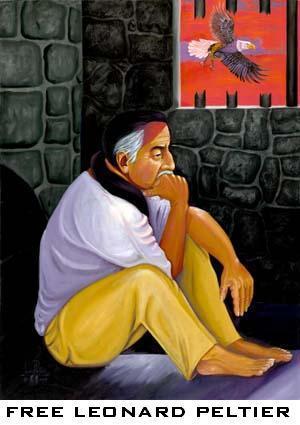
Initially, it must support movements such as those calling for the freedom of Lakota brother Leonard Peltier, the MOVE veterans of August 8th, 1978, the remaining two members of the Angola 3: Herman Wallace and Albert Woodfox, Sundiata Acoli, Russell “Maroon” Shoatz, and many other brothers and sisters who’ve spent lifetimes in steel and brick hellholes.


But, the Occupy Movement must do more.

As it shifted the discussion and paradigm on economic issues, it must turn the wheel of the so-called ‘Criminal Justice System’ in America, that is in fact, a destructive, counter-productive, annual $69 billion boondoogle of repression, better-known by activists as the Prison-Industrial-Complex.


That means more than a one-day event, no matter how massive or impressive. It means building a mass movement that demands and fights for real change, and eventually abolition of structures that do far more social damage than good.

It means the abolition of solitary confinement, for it is no more than modern-day torture chambers for the poor.

It means the repeal of repressive laws that support such structures.

It means social change—or it means nothing.

So let us begin—Down With the Prison Industrial Complex!

Occupy4Prisoners: Razor Wire Women speak out.

Below are several contributions to Occupy4Prisoners Day from women behind the walls. These are but a few of the prisoner's statements about the Occupy Movement and the Prison Industrial Complex that I'll be publishing this weekend from prisoners across the country. We don't have any actions organized in Phoenix for that day (Monday, FEB 20), but I'll be out most of the day doing some direct actions myself, and anyone is welcome to join me. email or call: prisonabolitionist@gmail.com / 480-580-6807 
 
from the Occupy4Prisoners movement: 
 Statements from People in Prisons for February 20th – 
National Occupy Day in Support of Prisoners


----Jane Dorotik----
Jane Dorotik was convicted at trial in 2001 of murdering her husband and sentenced to 25-life in the California Department of Corrections and Rehabilitation. She is a contributor to the book Razor Wire Women (Chapter 9: The Prison Mentality). Her brief piece here frames the general context from which the rest of the women are speaking:


The 2.3 million individuals that we as a nation incarcerate has become one of the defining qualities of this country of ours. Never before in the history of civilization has a country locked away so many of its own people. Have we as society become so violent, so incorrigible that we must lock away so many? How did we get to this point under the guise of ‘public safety?’

The cost of incarcerating women is immense. The average annual cost to incarcerate a woman is $50,000 and the average cost to incarcerate a woman over 55 is a staggering $138,000. Because of their role as mothers, the costs and consequences go far beyond the criminal justice system. Their children are either raised by other family members or are sent to the state’s foster care system. Children whose parents are incarcerated are 4-5 times more likely to become incarcerated themselves, thus perpetuating the intergenerational incarceration cycle. Since 1991, the number of children with a mother in prison has increased by more than 131% and nationwide more than half of children whose mother are incarcerated are under age 10.

The prison system is a system gone awry, gravely compromised and rampant with abuses. It is a terrifying breeding ground for anger, hatred, sexism, homophobia and dominating exploitation of other human beings. We are warehousing people, punishing them and then returning them to society worse off than when they entered the system. The violence that then comes out of these prisons is a much greater threat to public safety than any foreign terrorist group ever could be.


-----Krista Funk----
The bankers are legal racketeers. They are rewarded for their crimes. But the people at the bottom of the 99%, the poor, we are warehoused in the Prison Industrial Complex. They take away our ability to vote once we are inside because that might change the way things are. The rich get richer, the poor give up, and out of desperation they turn on their families and their communities. This cycle has to change!


"CCWP is a grassroots social justice organization, with members inside and outside prison, that challenges the institutional violence imposed on women, transgender people, and communities of color by the prison industrial complex (PIC). We see the struggle for racial and gender justice as central to dismantling the PIC and we prioritize the leadership of the people, families, and communities most impacted in building this movement."

These three women are all writing from the San Francisco county jail, by the way.

---Alisha Coleman---
San Francisco County Jail


Truth is…

The picture I’m about to paint can only be heard,
so listen closely to every word.

Innocent until proven guilty?
They can’t be serious,
In a system where
Drug dealers get more time
than serial killers,
juveniles get tried as adults,
before they become one.
I guess nobody musta warned’em
about playing with knives and guns.

Guilty by association?
That’s what it’s called
then they get hauled
off to the pen,
where some girls become boyz and some boyz
become women.
Sitting around
unaware of who they are,
wounded while in the belly of the beast.
I call’em invisible scars,
the kind that can’t be healed
by Neosporin and stitches.

Went in walkin’
came out switching.

Could you imagine what it’s like?
Being told that the beginning
is really the end of your life.
3 strikes and you’re out!
Some think it’s a game,
but it’s really outta my hands.
Lord knows, I’m not tryna do life
on installment plans.

Everybody wanna be a part
Of the occupy system,
I need to occupy my life and
find something to do with it,
otherwise it’s useless.

Some may mistake my words as verbally abusive,
But the truth is…

How do we expect our kids to grow
from concrete,
accept defeat,
have to fend for themselves
in cells where it is dark
and hot as hell?
More parents come to see kids in jail
than they do at graduations.
That’s cuz the new diploma
is parole or probation

Fucked up situation
No contender.

“Now I’ll be gone until November”
Listening to a public pretender
telling me to plea
Y?
Cuz I’m young, black, and sell crack in da streets.
Babies committing robbery,
1st degree.

Even with blind eyes
I could see it ain’t cool.
They building prison programs
and tearing down schools.
We all got an opinion
just like we all have a choice.
No one can hear you speak
if you don’t use your voice!

Alisha Coleman, SF County Jail


---Veronica Hernandez---
San Francisco County Jail

My name is Veronica Hernandez and I am a 20-year-old young woman that has been incarcerated since I was 16-years-old and tried as an adult at 17-years-old.

Prior to being charged as an adult I was appointed a no-good attorney that couldn’t have cared less about me or the outcome of my case and consequently; had put absolutely no effort into representing me adequately. There are no law libraries or legal services at Juvenile Hall so a juvenile rather it be for better or for worse had literally no choice but to be dependent on his or her court-appointed attorney and trust that him or her will lead them in the right direction. Unfortunately, for me that direction was to adult court where I now face a life sentence should I be convicted.

In California, 16-years-old are eligible to be tried as adults and in some states, the minimum age to be tried as an adult is 13-years-old and in others, there is no age limit at all depending on the nature of the crime. Regardless of the age, juveniles that are tried as adults are subjected to harsher punishments that juvenile court judges lack the power to impose such as life without the possibility of parole or sentences that are so outrageous like “43 to life” or “51 to life” that those sentences might as well be life without the possibility of parole.

Although a juvenile’s right to a hearing before a case can be transferred to adult court was established by Kent V. U.S. (U.S. Sup. Ct. 1966) there are still cases that get transferred to adult court without a hearing at all and that is known as a “direct filing.” The D.A> can file a direct filing on a juvenile that is 14-years-old or older and that contradicts California’s so-called minimum age of 16-years old or older to be eligible at being tried as an adult and a juveniles so-called right to a hearing.

The human mind doesn’t stop developing until the age of 25, so it is ridiculous that a judge can even be given the power to determine that a juvenile can never be rehabilitated and will remain at the same state of mind that the juvenile was in at the time of their crime was committed for the rest of his or her life. Aside from ridiculous…it is outrageous…oppressive…
opprobrious…and something that needs to cease…abolish this oppression and give children the chance at life that each and everyone of them deserves.

Veronica Hernandez, SF County Jail
---Margarita---
San Francisco County Jail 
My name is Margarita and I’m gonna tell you my story. I ran away from home at 11 years old and fucked up my whole life and career. My dad used to molest me when I was very young. I can remember as far back as age 2. He sure did some foul things to me. I didn’t know any better but he use to tell me if I said anything he would take me off the team. You see I raced downhill snow skiing on the U.S.A. women’s division ski team and I was very good at what I did. My father knew it to so he used that as bait. By molesting me and doing ungodly things to me that father’s wouldn’t dream of doing to their daughters.

I was very active growing up, a tomboy some would say. I raced motorcross, BMX, swimming, dance, karate, etc. I traveled all over for my snow skiing though. I ran away at my last speed skating race when I was 11 ½ years old. My parents were already divorced. I told my mom what Daddy did at age 6. Of course she didn’t believe me so she put cameras in the room and caught him on tape. Back then we wanted it kept quiet. My dad owned the leather factory and growing up in Black Hawk, California would have ruined his name. Anyways, I left and went to Los Angeles, from Los Angeles to Watts, California. At age 13 ½ I caught my first case and was convicted as a young adult; the first female for a 187 at age 14 to be convicted as an adult. I got 15 years to life and did 12 years. I started in Juvie and then transferred to Youth Authority and from Youth Authority to California Institute for Women.

Me and this other inmate caught an escape. We stole the fire truck at CIW and was transferred to Chowchilla. There I did my first stretch of 8 years; 4 in lock-down and 4 on the yard. They tried to give me 3 years more in lock-down for an assault on a C.O. He came into my cell and tried to rape me. So, when I was out in the day room, ironing my pants, I took the iron and hit him over the head with it. I stayed 6 months in confinement. I also had a petition going around letting all the girls sign it cause I wasn’t the first victim he did this to. But he wasn’t gonna keep getting away. I ended up with 560 signatures and he was escorted off the yard and his rights were stripped from him. No longer in the state of California or in the United States can he become a legal Correctional Officer in any federal or state prison.

After that I did my last 4 years at N.C.W.F. Stockton, California. I left Stockton and went straight to Delancy Street where I did 5 years and graduated here in San Francisco. I was sitting on top of the world. I had 2 cars, 2 bank accounts, 3 jobs, doing super good then one day I said, “Fuck it all.” I left my apartment in Oakland with everything I owned, closed both bank accounts and withdrew the money I worked hard at and my savings which was a total of $30,000 dollars. Down the drain. I smoked it, shot it, all that. But thank the lord and knock on wood that I never went back to prison but if I don’t stop and start giving a fuck I will be. I’ll be on the first train smoking. Which now leads me to San Francisco County Jail.

Margarita, SF County Jail


-------POLITICAL PRISONER LYNNE STEWART----
Lynne Stewart is a pretty famous American attorney, best known for representing radicals, revolutionaries, and Islamic terrorists. She was sent to prison in 2009 on charges that she was assisting her client, "The Blind Sheihk" behind the 1983 Trade Center bombings, with transmitting messages to his followers. When she appealed the sentence as being too harsh due to her age and cancer, she was given even more time. Visit her supporters' website for more info...

---Lynne Stewart---


This occupy rally is what Must happen at every jail in the United States–a direct challenge to Arbitrary Power that thinks it can lock up those with the greatest grievances against the system and systematically demonize them to their fellow citizens.

I speak now for all the 2 Million but of course. particularly on behalf of those political prisoners who actively fought and tested this unjust system and now suffer in SHU’s, and other forms of Solitary, for that. Many have been tortured for the last thirty years or more. When they were captured in the heady political days of the ’60s and ’70s, we were convinced that fundamental change was inevitable –indeed that it was right around the corner. It still remains inevitable but now we understand the protracted struggle necessary to breach this evil system.


I for one am recruited to accomplish the freedom of political prisoners and as my comrade Chairman Fred says “FREE ‘EM ALL” !!!
 

Friday, September 9, 2011

Political Prisoner Watch: Helen Woodson Released

Anarchist Resistance in Phoenix
(April 25, 2010)


From the Nuclear Resister, a letter from Helen about her release from prison today...this is an awesome woman - if you run into her, please thank her for all she's done for peace, and welcome her home.


--------------------

From FMC Carswell, Max Unit, by Helen Woodson

Silo Pruning Hook activist Helen Woodson is due to be released September 9 after serving nearly 27 years in prison for that and subsequent actions against war and other assaults on human dignity, peace and the environment.

July 23, 2011

Dear Jack & Felice,

48 days – and then I’ll emerge, Winkle-esque, into a very different world. I’ve always been a troglodyte and came to prison never having laid eyes on a TV remote control. Now the federal prisons have e-mail! I am not permitted to use it, but I did have to acquire rudimentary computer skills to access my address list and commissary account.

Years earlier, a good friend and I, ignorant of the terminology, had decided to call the process of using the Internet “mousing-on”. Before I acquired the afore-mentioned rudimentary skills, I thought one held the mouse in one’s hand and aimed it at the screen. You know, like ye olde remote control. Undaunted, when the need arose, it took me a mere 3 weeks to master the defiant little rodent, after which I gloated for days (okay, forever) about its final submission to my clear genetic superiority. Skype, beware! Woodson’s on the way. I realize I’m going on a bit randomly, but I get to do that because this is my last such letter and because in the end, it will all come together.

Some things change. Some never do. Alfred Nobel left much of his fortune for the establishment of annual awards. He had made the fortune after experimenting with nitroglycerin. His first manufacturing plant blew up, killing his youngest brother, Emil. Did that deter him? It did not, and 3 years later, he patented his new explosive, “dynamite”. This may explain why it is entirely consistent that Barak Obama was awarded the Nobel Peace Prize while engaged in 2 wars and then went on to a starring role in a third. If I ever write a book about war, I will dedicate it to Emil Nobel and the hundreds of millions of our other brothers and sisters whom we’ve blown up over the years in the pursuit of peace (and prizes).

Some here have asked if my prison time has gone by quickly. The very thought shocks me. Counting previous jail time, we’re talking about almost 28 years. Rip Van Winkle makes a good story, but imagine waking up one morning to discover you’ve lost the last 28 years of your life! Life should not go by quickly. I have always loved life generally and my own life specifically, and since we never live alone, that means having loved those with whom I’ve shared it. There is much that I’m looking forward to post-release, but I’m also keenly aware that I will be bidding farewell, first to beloved friends here whose absence from my life will be very strange and very sad. And then to the felonious folks out there who have been my dear friends for more than 25 years and with whom I will no longer be allowed contact.

Some things change. A couple of years ago, 2 feral cats showed up in our yard, suitably ferocious as befit their station in life. Now they attack only our shoelaces and mostly just snooze on our laps. A few days ago, a raccoon family began visiting. The mother is encouraging her 5 babies to move into independence, and they’re eager to explore this new world. In a year, they will no longer recognize each other. In the end, it all does come together. There really is objective Truth, and it can be known. There really is objective moral right and wrong, and none of us can abdicate the responsibility to recognize and live by it. And there really is Love. Some things never change. 48 days…

Love,

Helen

Friday, September 2, 2011

CounterInsurgency and Community Policing: Kristian Williams


"Abolish the Police"
Arizona State Capitol, Phoenix
March 15, 2011


From the Freedom Archives list-serve, an excellent resource on political prisoners and the prison industrial complex. Contact Claude below to sign up.

--------------------


The Other Side of the COIN:
Counterinsurgency and Community Policing
An abridged version of a longer article
( http://www.interfacejournal.net/wordpress/wp-content/uploads/2011/05/Interface-3-1-Williams.pdf )

by Kristian Williams

The following discussion of U.S. domestic counterinsurgency is adapted and condensed with permission from “The Other Side of the COIN: Counterinsurgency and Community Policing” by Kristian Williams. Williams is a member of Rose City Copwatch in Portland, Oregon, and the author of Our Enemies in Blue: Police and Power in America (Soft Skull, 2004; South End Press, 2007). The full paper appeared in the May 2011 issue of Interface, and a full list of bibliographic sources can be found there.


The unrest of the 1960s left the police in a difficult position. The cops' response to the social movements of the day -- the civil rights and anti-war movements especially -- had cost them dearly in terms of public credibility, elite support, and officer morale. Frequent and overt recourse to violence, combined with covert surveillance, infiltration, and disruption (typified by the FBI's COINTELPRO operations), had not only failed to squelch the popular movements, it had also diminished trust in law enforcement.

The police needed to re-invent themselves, and the first place they looked for models was the military. Military training, tactics, equipment, and weaponry, made their way into domestic police departments -- as did veterans returning from Vietnam, and, more subtly, military approaches to organization, deployment, and command and control. Police strategists specifically began studying counterinsurgency warfare.

"Counterinsurgency" (or "COIN" is military jargon) refers to a kind of military operation outside of conventional army-vs.-army war-fighting, and is sometimes called "low-intensity" or "asymmetrical" combat. But counterinsurgency also describes a particular perspective on how such operations ought to be managed. This style of warfare is characterized by an emphasis on intelligence, security and peace-keeping operations, population control, propaganda, and efforts to gain the trust of the people.

This last point is the crucial one. As U.S. Army Field Manual, FM 3-24, Counterinsurgency, declares: "Legitimacy is the main objective."

So during the period of police militarization, the cops also began experimenting with a "softer," more friendly type of law enforcement -- foot patrols, neighborhood meetings, police-sponsored youth activities, and attention to quality-of-life issues quite apart from crime. These techniques eventually coalesced into an approach called "community policing."
Both militarization and community policing arose at the same time, and in response to the same social pressures. The advantages the state receives from each aspect are fairly clear: Militarization increases available force, but as important, it also provides improved discipline and command and control. It re-orders the police agency to allow for better coordination and teamwork, while also opening space for local initiative and officer discretion.

Community policing, meanwhile, helps to legitimize police efforts by presenting cops as problem-solvers. It forms police-driven partnerships that put additional resources at their disposal and win the cooperation of community leaders. And, by increasing daily, friendly contacts with people in the neighborhood, community policing provides a direct supply of low-level information.

Such information is vital, because COIN theorists advocate preemptive action against budding rebellions. The problem is that, at the early stages, subversion is not obvious and the state may not know that a threat exists. In order to anticipate conflict and prevent an insurgency, as FM 3-24 explains, COIN strategists "require insight into cultures, perceptions, values, beliefs, interests and decision-making processes of individuals and groups." The resulting intelligence work is concerned with questions that are primarily sociological.

The U.S. government's mapping of the American Muslim population should be viewed in this light. In 2002 and 2003, the Department of Homeland Security requested -- and received -- statistical data, sorted by zip code and nationality, on people who identified themselves as "Arab" in the 2000 census. And in February 2003, FBI director Robert Mueller ordered all 56 Bureau field offices to create demographic profiles of their areas of operation, specifically including the number of mosques. One Justice Department official explained that the demographics would be used "to set performance goals and objectives" for anti-terror efforts and electronic surveillance. Similarly, in 2007, the LAPD began planning its own mapping program, dressed in the rhetoric of community policing. As the L.A. Times reported, the "Los Angeles Police Department's counter-terrorism bureau proposed using U.S. census data and other demographic information to pinpoint various Muslim communities and then reach out to them through social service agencies."

By working with welfare services, churches, non-profits, and similar organizations, police can insinuate themselves into the fabric of neighborhood life, gain access to new sources of information, and influence community leaders. Sometimes the police can used these relationships to channel and control political opposition, moving it in safe, institutional, and reformist directions, rather than toward more radical or militant action.

We saw this dynamic at work in Oakland after transit police shot and killed an unarmed black man in 2009. In practice, preventing riots became the primary focus of the institutionalized left, as local nonprofits and churches collaborated with police to contain community anger and channel it into ritualized protest. There is no guarantee that resistance would have gone further had the nonprofits not intervened, or that greater conflict would have won greater gains. But their intervention certainly helped to contain the rebellion, and closed off untold possibilities for further action. That is, quite clearly, what it was intended to do.

We also see the logic of counterinsurgency at work in police anti-gang campaigns: The creation of databases listing suspected gang members; the mapping of the social environment, illustrating connections between gang members, associates, families, etc.; the development of community contacts, especially with local leaders -- all these police practices mirror the techniques of military occupation. Police intelligence efforts are then paired with a campaign of persistent low-level harassment -- stops, searches, petty citations, and the like. Each instance of harassment offers the cops the opportunity to collect additional information on the gang network while at the same time creating an inhospitable environment for those associated with gang activity.

For example, in Salinas, California, the Monterey County Gang Task Force conducts mass-arrest "round-ups," makes random traffic stops, and regularly searches the homes of gang members on parole or probation. The sheer volume of such activity is astonishing: Since it was formed in 2005, the Task Force has been responsible for 21,000 vehicle or pedestrian stops, 5,000 parole and probation "compliance" searches, and 2,800 arrests.

Furthermore, since February 2009, combat veterans from Iraq and Afghanistan have been serving as advisors to Salinas police, with the stated aim of applying counterinsurgency tools to local anti-gang efforts. Along with their expertise, the military advisors also arrive with software, including a computer program that maps the connections between gang activity, individual suspects, and their social circles, family ties, and neighborhood connections.

This police-military partnership is occurring alongside a renewal and expansion of the SPD's community policing philosophy. The new community focus (encouraged by the military advisors) includes Spanish language training, "Gifts for Guns" trade-in events, an anonymous tip hotline, senior-citizen volunteer programs, a larger role for the Police Community Advisory Council, and police-sponsored after-school activities.

Salinas police have also initiated partnerships with other local, state, and federal law enforcement agencies, including the Marshals, the ATF (Alcohol, Tobacco, and Firearms), the FBI, and Immigration and Customs Enforcement. The most spectacular product of these partnerships, so far, was a set of coordinated raids on April 22, 2010, codenamed "Operation Knockout."

The raids -- coming after months of investigation -- mobilized more than 200 law enforcement agents and resulted in 100 arrests, as well as the confiscation of forty pounds of cocaine, fourteen pounds of marijuana, and a dozen guns. Operation Knockout was intended, not only to disrupt the targeted gangs, but to serve as a warning to others. Deputy Police Chief Kelly McMillin said: "We're going to follow quickly with call-ins of specific groups that we know are very active. . . . We are going to tell them that what happened on the 22nd could very well happen to them."

Such anti-gang efforts are always implicitly political, especially as they become permanent features of life in poor Black and Latino communities. Though ostensibly aimed at preventing gang violence, counter-gang campaigns inevitably lead police to monitor the entire community. One Fresno cop explains the intended scope of his department's gang files: “If you’re twenty-one, male, living in one of these neighborhoods, been in Fresno for ten years and you’re not in our computer­then there’s definitely a problem.”

With the emergence of the counterinsurgency model, the state has ceased to view subversives in isolation from the society surrounding them. Increasingly, it has directed its attention -- its intelligence gathering, its coercive force, and its alliance building -- toward the population as a whole. Repression, in other words, is not something that happens solely, or even mainly, to activists; and it not just the province of red squads, but of gang enforcement teams, neighborhood liaison officers, and even police advisory boards. It comprises all those methods -- routine and extraordinary, coercive and collaborative -- used to regulate the conflict inherent in a stratified society. Our task is to decipher the politics implicit in these efforts, to discern the ways that they preserve state power, neutralize resistance, and maintain social inequality.

Our further task is to respond. An effective response to repression must include an offensive component -- an attack against the apparatus of repression, which (if successful) will leave the state weaker and the social movement stronger. This outcome, of course, should be the aim from the start.

But it is, in a sense, misleading to speak solely in terms of responding to repression. Repression exists already. It intervenes preemptively. It forms part of the context in which we act. Oppositional movements cannot avoid repression; the challenge, instead, must be to overcome it.

Freedom Archives

522 Valencia Street
San Francisco, CA 94110

415 863-9977

www.Freedomarchives.org


Questions and comments may be sent to claude@freedomarchives.org

Sunday, July 3, 2011

To Be Free: Nina, Marilyn, and Perryville Women's Resistance.


One of the best professors I've ever had, documentary producer HLT Quan, turned me on to Nina Simone during my course with her on Social Movements at Arizona State University a few years ago. Dr. Quan probably doesn't realize it, but she has a lot to do with me embracing prison abolition. I ended up dropping out of school to take all this on, in fact...

Anyway, this tune is to honor the women of Arizona's Perryville prison in Goodyear who have been resisting coercion and abuse of late, and fighting back by speaking out. That not only goes for those prisoners assigned to the Martori Farms work crew, but those who are contesting the poor medical care, writing letters to legislators about conditions, helping other women file grievances, and resisting in a host of other ways - some much more subtle, like teaching another woman to read.

Now, the prisoners can't watch this video, but imagine that just for a few minutes you can commandeer a guard station and the prison communications system. Lock yourselves in, pop open all the cells, crank out a soulful tune, and dance...that would almost be worth the price one would undoubtedly have to pay, once they broke in and took you down for it.

That's just a fantasy to enjoy, women, not advice.

I often play Nina in remembrance of poet and former political prisoner Marilyn Buck - known as "the only white member of the Black Revolutionary Army".
She was sentenced to 80 years for armed car robberies she carried out to fund liberation movements, as well as for the 1979 escape of Assata Shakur from a New Jersey prison. Marilyn and her comrades (see the Resistance Conspiracy) were also prosecuted for the 1983 bombing of the U.S. Senate building.

During her incarceration, Marilyn was known for her continued outspoken criticism of the US government and the prison industrial complex and her advocacy on behalf of other prisoners in addition to her art and poetry. Branded as one of the most infamous women "ter
rorists" of the 20th century, even after 15 years in federal custody Marilyn was considered such a threat that she was thrown into the hole and forbidden to even contact her attorney for two weeks after the attacks of 911, while they investigated any possible connection she had to them.

Because of that - and the officer and guards killed in the Brinks robberies - I never would have expected the feds to release her on parole. Never. What a blessing that they did. Marilyn developed an extremely aggressive cancer and was paroled on compassionate grounds last summer, two weeks before she died. She was always more free, however - even in prison - than most Americans who go through their lives as sheep.

Take some time to check out Marilyn's work
...start with the Wild Poppies CD at Freedom Archives. Here's the title piece...


Wild Poppies

Marilyn Buck

[This poem is read on the CD by Marilyn Buck. MP3 of this poem]


I remember red poppies, wild behind the school house
I didn’t want to be there, but I loved to watch the poppies

I used to sit in the window of my room, sketching charcoal trees
what happened to those magnolia trees, to that girl?

I went off to college, escaped my father’s thunderstorms
Berkeley. Rebellion. Exhilaration!

the Vietnam war, Black Power, Che took me to Chicago
midnight lights under Wacker Dr. Uptown. South Side. Slapped
by self-determination for taking Freedom Wall photos
without asking

on to California, driving at 3:00 in the morning in the mountains,
I got it: what self-determination means
A daunting task for a young white woman, I was humbled

practice is concrete … harder than crystal-dream concepts

San Francisco, on the front steps at Fulton St.
smoking reefer, drinking “bitterdog” with Black Panthers and white
hippie radicals, talking about when the revolution comes

the revolution did not come. Fred Bennett was missing
we learned he’d been found: ashes, bones, a wedding ring
but later there was Assata’s freedom smile

then I was captured, locked into a cell of sewer water
spirit deflated. I survived, carried on, glad to be
like a weed, a wild red poppy,
rooted in life


And this was one of Marilyn's last published essays, printed by Critical Resistance's paper, "The Abolitionist" (W2010):


Alternatives While Waiting: Self-Reliance
by Marilyn Buck


A community’s people, with their creative energy and labour, are the greatest resource it has, but an increasing number, mostly young, are MIA, in graves or prisons, into which so many rush obliviously when they act out Hollywood-constructed desires, images, and stereotypes to “make it” in the midst of still-white supremacist and hierarchical America. Far too many have embraced the 30 years of culturally-contrived amnesia that has mis-educated them to believe in the very system that exiles them to the cages. Valuable human beings – community residents, who could have and should have been the teachers, nurses, doctors, mechanics, public servants, and builders of their communities are disappeared.

Among the disappeared and exiled, many haven’t been formally educated or taught to read well, having dropped out or been driven out of the faltering California school systems, weakened both by funding and a general disregard for and animosity towards the children of the working and underemployed classes, particularly when Black, Latino, or Asian. There are a few, if any, educational or rehabilitation-geared programs within prisons. On a recent KPFA radio program, a freed elder pointed out that many of California’s prisons are on lock-down at any given time, meaning that the few programs that do exist, however reluctantly and apathetically, do not function much of the time.

In the prison charnel houses, forgetfulness or oblivion settles like quicklime on the spirit, intelligence and bodies of exiled and illegalized young people. A sense of responsibility to the community is replaced with rage, and beneath any posturing, despair, self-mutilation, and suicide.

Alternatives? To re-imagine communities with the resources to educate children, to provide work with sufficient income, to get drugs and the weapons of collective suicide out, to make the streets safe again for children, elders and the young women and men. This is similar to the 10-point program the old Black Panther Party called for, a program that in slightly different manifestations is still understood world-wide as necessary for community and nations’ health and well-being for peace and justice.

It’s never too later to learn, to get educated or develop the social or political conscience necessary to challenge the systematic social genocide of our communities. No one has to stay lost; no one is not subject to change. The question is: will you change yourself, have a hand in your destiny and development, or will you accept the changes forced at you by the prison systems’ dog-eat-dog programming that wants you to become a gladiator and a puppet?

There are many who are looking for ways to break such a decimating cycle. Meanwhile, what? The prisoner’s alternative is not to wait for alternatives and social change from the outside, but to begin a process of reconstruction on the inside.

To be a builder, or to be a demolisher, those are the choices. It’s easy to demolish, to destroy. You can be a one-man or a 100-man wrecking crew, but to build you have to become a bricklayer, willing to dig foundations, willing to take care of your neighbourhood and work with others. It means being humble and giving back because when you left you took a whole lot of human and community potential with you. It means learning what you need to know. Find a teacher, no matter whether they wear your colours, are your colour, or are low on the ladder of that peculiar prison concept of “respect.” (Prison culture doesn’t really give any prisoner true respect, or better-said, dignity; the man is still pulling the strings.) If you can’t earn a skill you want where you are (like being a doctor or an environmental engineer), learn all you can about the world. Learn about other societies; learn about communities’ fight for self-reliance and self-determination. Learn Spanish, or English, or Chinese. Or history. The more you study about the world, the better able you will be to see where you are and can go in the world. Choose to be on the side of the people who are not the greedy rulers and bosses.

Of course it’s easier to succumb to the haters who want to decimate your community, and to hang with those who participate in the suicide of their own communities through ignorance and individualism. Reignite your creativity and imagination that you may have put aside when you were 14 or that was discouraged in school. There is enough war from without, end the wars from within. Nothing can be build during a civil war, and certainly nothing can be defended from the war from without, without skills, knowledge and dignity of connection to and love for your community. Become a warrior for reconstruction.

Set a premium on education. No one can ever take it from you. Ultimately, knowledge and skills are more valuable than gold and SUVs, or anything you may have possessed for a few brief moments in life, before prison became your home with its prolonged lesson in absence.

Saturday, June 11, 2011

GREEN is the NEW RED: Support Marie Mason!


Link
From Peg:

Please go like Marie's supporters' Spacebook group (though keep in mind the FBI no doubt likes her page a lot, so stay away if you'll just bring or find trouble there...they WILL follow you home - but if you're reading this with any interest, they or Homeland Security probably have you on their radar already - don't let that scare you into silence, though. I think we need as many people to join as possible)
.

Funds to support Marie should go to her network, not the prison. The Phoenix Anarchists also pass a hat with an update on political prisoner support every Thursday evening at Conspire (
901 n 5th st, Phoenix, AZ 85004 · Get Directions). Just keep in mind that the FBI probably already likes us, too, of course.

Below is more info about Marie and the Green Scare. The bit about Marie was lifted from the first website linked to above. If you write to her, please visit the site for additional information so you don't cause her problems.
I learned a little about that at another prisoner's expense - take it very seriously.
---------------------------


Get on the Listserv!

Donate

Click here to donate.

Write to Marie Mason

We encourage everyone to write to Marie Mason in prison:

Marie Mason #04672-061

FMC Carswell

Federal Medical Center

P.O. Box 27137

Fort Worth, TX 76127

Under no circumstances mention any illegal acts. Letters that mention other Green Scare prisoners may be rejected. Mason has a list of 100 pre-approved people she can write to; if you are not on that list, she will be able to receive your letter but not write back.

Everyone must use their first and last name when writing. All letters must be entirely in English. Be sure to include your return address on the envelope. You should also write her name and prisoner number on each piece of correspondence, as the prison tends to discard the envelope and then may "lose" track of who the letter is going to.

About Marie Mason

Marie Mason is a loving mother of two and a long-time activist in the environmental and labor movements. In March 2008, she was arrested by federal authorities for charges related to two acts of property destruction that occurred in 1999 and 2000; no one was injured in either of them. She accepted a plea bargain and was sentenced on February 5, 2009 to just under 22 years. She is now serving the longest sentence of any "Green Scare" prisoner.

The “Green Scare” is the name given to the recent arrests of animal rights and environmental activists who have been charged with acts of economic sabotage. Federal authorities have sought outrageous sentences (often Life in prison) and have publicly and legally labeled the activists as “terrorists” – despite the fact that no one has been killed or injured in any of the acts.

Supporting Marie Mason does not mean agreeing with the actions that she took -- but it does mean opposing the fear-mongering tactics of the federal government and the Linkoutrageous sentences they have imposed.

Background on the Green Scare

For more information on the Green Scare see here

Friday, June 10, 2011

Solidarity with Anarchist Prisoners: Beyond June 11.


Link
We didn't get a big thing for this planned in time for June 11th, but look for the Phoenix Anarchists to pull something together on this soon, folks...we support Marie Mason now on an on-going basis. The following strategy statement should help us do right by her as well as other targets of political repression.

------------------------------------

June 11th Day of Solidarity; Strategy Statement

June 11th Strategy

Preface

This is a strategy proposal for June 11th as a part of a broader push to develop livable support for long-term anarchist prisoners in the US.

This statement specifically contemplates an audience of radicals & anarchists coming out of environmentalist, animal rights and/or anti-globalization milieus. Though, the readership is likely to include more people, that just happens to be my background and that Marie’s and Eric’s. It felt insincere to speak of Marie and Eric as a part of a very long history of repression in this statement, in part because I think the possible strategies employed for some longterm political prisoners look different than the strategy that we’re proposing. In the section on repression, I tried to steer away from an if-you-can’t-do-the-time-then-don’t-do-the-crime approach. I wanted to stress that we need to create political conditions that jointly Don’t Excuse Cooperation with the State and that Do Dispel the Myths of Its Advantages.

The first section broaches why it is important to develop a new strategy and new framework for supporting Marie, Eric and all long-term anarchist prisoners. The second section explicitly places long-term anarchist prisoner support in the context of anti-repression. The third section explicitly states that Marie and Eric are relevant and a few of myriad reasons why. The fourth section expounds some possible objectives of the specific day and date.

Introduction to Long-term Anarchist Prisoner Support in the United States

In the recent history of radical eco-movements in the US, the effects of repression are palpable and have shaped how we live. The cases of Marie Mason and Eric McDavid are two critical examples of repression’s effects, but only two of many. Though these cases are not unusual cases of the state’s power, Eric and Marie have the longest standing sentences of any environmental prisoners in the United States. With Eric and Marie we must shift from a support scheme based on helping individuals through short-term prison sentences to a new way of thinking and doing to support them throughout their long-term sentences [added emphasis on them & out].

Part I. Why do we do the things we do?

The conventions in place for short-term prisoner support do not make sense for long-term prisoners.

The basic strategy for short-term prisoner support helps the incarcerated person meet basic needs such as food, medical assistance, and hope. Short-term tactics involve support crews who organize letter-writing nights and fundraisers to pay off lawyer bills, court fees and (possibly) restitution; who solicit donations for commissary; and who manage phone trees for jail calls. Short-term support does its best to help prisoners make it through the arduous years until they’re out. These endeavors do, of course, have very real effects in the lives on short-term prisoners—and at times in the lives long-term prisoners as well.

However, long-term prisoners aren’t getting out any time soon. Consequently, they have a different set of needs, and their support should have a different set of corresponding goals. Examples include:

  • Food

  • Proper Medical Care

  • Hope

  • Engagement with politics and activity outside of prison

  • Outside resources for prison struggle

  • Growing friendships and various kinds of relationships, both inside and outside of prison

  • Political and public voice inside and outside of prison

  • Constant—consistent and unrelenting—legal support

  • Communication in which they have agency

  • Get them the fuck out, however, impossible it seems

  • Wouldn’t it be great and realistic, if when prison warden puts them in solitary, then outside support expressed some sort of outrage, or any reaction at all.

  • Many more

The short-term tactics (letter-writing and fundraisers) are unsustainable for a long-term prisoner sentence. Reasons include:

  • Burning out

  • The tasks and needs are bigger and take a great commitment of time and energy and cannot be sustained with high turnover.

  • Many more individual reasons

Burnout and high turnover are serious concerns with the pressure of +20-year sentences. To avoid such shortcomings, long-term support requires more dynamic interaction between a great variety of groups of people who are responsible for the material needs of prisoners. This means creating more diffuse support from different and wider circles.

For the same reasons that material needs require a broader support lattice, wider circles are needed to support prisoner’s political needs, including access to public voice, solidarity, public support and defense. The publicity of their imprisonment seems crucial for the following reasons:

  1. as a way of saying that they are still present

  2. as a way of reminding ourselves

  3. as a way of constructing a network of media at Marie and Eric’s disposal

Often prisoners’ voices must pass through multiple channels just to have access to the conventional publication; we should streamline that path for them to facilitate their political (and any) engagement outside of prison and to create a greater audience for them speak on prison struggle/anything.

Part II. Long-Term Anarchist Prisoner Support in the Context of Anti-Repression

The objective here is to stop putting prisoner support in an ancillary position to other political engagements—that is, to stop thinking about and doing prisoner support as if it’s damage control or a patronage program. This strategy conceives of long-term prisoner support as a means of facilitating prisoners’ agency in every way—answering the questions of how do we live with them and not let the state take them from us. Eric and Marie are people who have been taken but are still very present.

How do we increase their presence and their ability to choose how they want to be present? This is as much a question for us as it is for Eric and Marie. They feel the constraints set in place by prison inextricably; we need to them out. In the process, we (you, me, Eric and Marie) need to uncover and cull out ways of living together in the face of prison.

How repression affects prisoners’ lives and all of our lives seems central to this objective and these questions.

Four Point Framework to Mitigate Repression

  1. Understanding that repression is central

    1. Repression is often divorced from other political campaigns. For instance, a campaign will have its political work and then will host the occasional know-your-rights workshop presented by another group that focuses specifically on anti-repression.

    2. Repression should be central to political strategy.

  2. Having a knowledge of how the legal system works to protect yourself (a bit) and gives you some agency in the matter

    1. It’s impossible to make decisions that contemplate the State’s repressive tactics when we don’t even know how the mechanics of that system work.

    2. When you know how things work, you can make choices possibly to affect the situation.

  3. Transparency in the face of repression

    1. Now: when a cop knocks, tell your friends.

    2. Future: when a cop knocks, alert the neighborhood!

  4. Making Links with others to facilitate the first three points

    1. To build a more diffuse plexus of relationships for support and publicity of state repression

Part III. Why are Marie and Eric relevant?

This is a loaded question. How could they—who are friends, family and fellow radicals—not be relevant?

But, also their cases demonstrate how repression has been effective and how it has not.

Examples of effective repression: They have long-term sentences that seem insurmountable. The State heavily mediates their communication with everyone. The State continues to use against us snitches, grand juries and persecution based on political ideology, which were present in both.

Examples of ineffective repression: They are amazing people with viewpoints, voices and power. They continue to form and sustain meaningful relationships and political engagements. Non-cooperation. Non-cooperation. Non-cooperation at every phase of their cases.

They are people to learn from and with.

Part IV. What is June 11th?

June 11th serves as a particular day to think about Marie and Eric and to look at where we have been in terms of repression. It’s not intended to be a letter-writing day, so you know you’ve done your bit of service for Eric and Marie. Instead it’s a day during which they can’t slip from our minds, and this history of repression that affects our present can’t slip away either. June 11th also serves as a yearly check-in to ask “where are we now?” in terms of repression and anti-repression.

June 11th began in 2004 as an international day of solidarity with long-term anarchist prisoner Jeff “Free” Luers. At the time, Jeff was serving 22+ years. Infuriated by the environmental devastation he saw occurring on a global scale, Free torched three SUVs at a car dealership in Eugene, Oregon. The sentence imposed on him was intended to send a clear message to others angered by capitalism's continued war on the Earth's ecosystems—and to those who were willing to take action to put a stop to it. After all, Free is not alone in his concerns about pollution, climate change, fossil fuels, and genetically modified organisms.

After years of struggle, Jeff and his legal team won a reduction in his sentence. He was released from prison in December 2009. In the years intervening Jeff's arrest and release, the FBI carried out a series of indictments and arrests in attempt to devastate radical environmental and anarchist communities. Two of the people caught up in this maelstrom of repression were Eric McDavid and Marie Mason.

Eric McDavid was arrested in January 2006 after entrapment by a paid government informant—“Anna”—and was charged with a single count of conspiracy. Eric, who never carried out any actions and was accused of what amounts to “thought crime,” refused to cooperate with the state and took his case to trial. After a trial fraught with errors, the jury convicted Eric. Subsequently he was sentenced to almost 20 years in prison. More information on Eric's case can be found at www.supporteric.org

Marie Mason was arrested in March 2008 after her former partner—Frank Ambrose —turned FBI informant. Marie faced a life sentence if she went to trial. In September, she accepted a plea agreement, in which she admitted her involvement in the burning of an office connected to GMO research and the destruction of a piece of logging equipment. At her sentencing hearing in February of the following year, the court sentenced her to almost 22 years. More information on Marie's case can be found at www.supportmariemason.org

Conclusion

In light of Free’s release, June 11th resumes as a day of international solidarity with

Marie Mason and Eric McDavid who share the unfortunate distinction of having the longest standing sentences of any environmental prisoners in the United States. Free began his sentence as a long-term anarchist prisoner, now his release represents what we want for all long-term anarchist prisoners—we want them out.

June 11th is an opportunity for more of us to begin consciously not to treat solidarity as a burden, but rather

To create ways to keep Marie and Eric present in our lives,

To facilitate Marie and Eric’s political voice and engagement outside of prison,

To develop relationships with Eric and Marie if we haven’t done so already,

To create opportunities to link together struggles,

To have something to talk about with non-anarchists,

To have a concrete starting point for building momentum against prison and prison-society.

  • Free Marie Mason! Free Eric McDavid!

Here is a list of Cities who are doing events on June 11th.


new york city, new york(a)

new york city, new york(b)

bloomington, indiana

west lafayette, indiana

sacramento, california
cincinnati, ohio

asheville, north carolina

salt lake city, utah

Barcelona, Spain

baltimore, maryland

chicago, illinois

eugene, oregon

pittsburgh, pennsylvania

worcester, massachusetts

olympia, washington
columbus, ohio
san francisco, California

montreal, quebec

guelph, Ontario

toronto, ontario

minneapolis, minnesota
detroit, michigan
ann arbor, michigan
tel aviv, israel

fresno, California

houston, texas
seattle, washington
melbourne, australia