Abolishing the Prison Industrial Complex --Part one of an interview with Criminal Injustice Kos co-editors Nancy Heitzeg and Kay Whitlock
By Angola 3 News Focusing on the prison abolitionist movement, we interview two co-editors of an exciting new series at Daily Kos, called Criminal InJustice Kos (
http://www.criminal-injustice-kos.dailykos.com), a weekly series "devoted to exploring the myths of 'crime', 'criminals', and criminal justice and the intersection of race/ethnicity/class/gender/sexuality/age/disability in policing and punishment. Criminal Injustice Kos is committed to furthering action towards reducing inequity in the US criminal justice system." Look for Criminal InJustice Kos every Wednesday at 6 pm CST.
Stay tuned for part 2, where we focus on the practicality of prison abolition and take a close look at alternatives to the US prison system.
Dr. Nancy Heitzeg (whose online name is “soothsayer99”) is an activist educator and Professor of Sociology and Co-Director of the interdisciplinary Critical Studies of Race/Ethnicity program at Saint Catherine University. She has written and presented widely on the subjects of race, class, gender and social control. Nancy is the author of Deviance: Rule-makers and Rule-breakers, and several articles exploring issue of race class gender and social control including: "Differentials in Deviance: Race, Class, Gender and Age" (in The International Handbook of Deviant Behavior, Routledge, forthcoming Summer 2010); "The Case Against Prison: in Prison Privatization: The State of Theory and Practice (forthcoming Fall 2010), "Education Not Incarceration: Interrupting the School to Prison Pipeline"(Forum on Public Policy, Oxford University Press, Winter 2010); "The Racialization of Crime and Punishment: Criminal Justice, Color-Blind Racism and the Political Economy of the Prison Industrial Complex"(with Dr. Rose Brewer, which appeared in a special volume co-edited by Dr. Heitzeg and Dr. Rodney Coates, of American Behavioral Scientist: Micro-Level Social Justice Projects, Pedagogy, and Democratic Movements, Winter 2008); and Race, Class and Legal Risk in the United States: Youth of Color and Colluding Systems of Social Control" (Forum on Public Policy, Oxford University Press, Winter 2009).
Be sure to read our earlier two-part interview with Heitzeg, published by Truthout, part one: Visiting a Modern Day Slave Plantation and part two: The Racialization of Crime and Punishment.
Kay Whitlock (whose online name is “RadioGirl”) is a Montana-based writer, organizer, and activist long engaged in progressive struggles for racial, gender, queer, environmental, and economic justice. She has written extensively on the intersection of race, gender, sexuality, and class in relation to police and prison violence, most notably in her former position as National Representative for LGBT Issues for the American Friends Service Committee (AFSC), a Quaker organization. Her publications for AFSC include Corrupting Justice: A Primer for LGBT Communities on Racism, Violence, Human Degradation & the Prison Industrial Complex (pdf download and In a Time of Broken Bones: A Call to Dialogue on Hate Violence and the Limitations of Hate Crimes Legislation (pdf download). With Joey L. Mogul and Andrea J. Ritchie, she is the co-author of Queer (In)Justice: The Criminalization of LGBT People in the United States, forthcoming from Beacon Press in February 2011 – an analysis of queer criminalization, centering race, class, and gender, from colonial contact to the present.
Angola 3 News: Why do you consider yourself a prison abolitionist? What does this term mean for you? Nancy Heitzeg: If one accepts, as I do, that prisons in the US are a contemporary extension of chattel slavery, that prisons are irredeemably rooted in racism and classism that prisons serve no purpose save corporate profit and raw retribution, then one must call for their abolition. Prison “reform” is insufficient if the very notion and reality of prison itself is grounded in inequality, injustice and destruction.
In a small yet dense book, Angela Davis asks Are Prisons Obsolete??? If prisons are indeed social structures rooted in racism, classism and fear – then we must take the questions seriously. We must try to imagine a nation – perhaps a world without prisons.
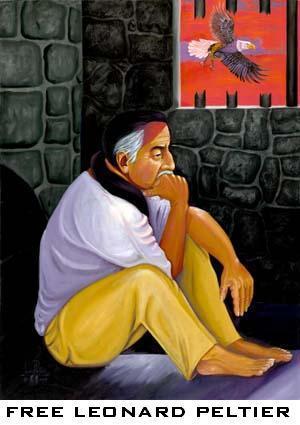
"As important as reforms may be, frameworks that rely exclusively on reforms help to produce the stultifying idea that nothing lies beyond the prison...We must give serious consideration to abolitionist strategies to dismantle the prison system...which preserves existing structures of racism as well as creates new ones...this is no more outlandish than the fact that race and economic status play more prominent roles in shaping the practices of social punishment than does crime." (Davis 1998 105) I have always known people who were in prison and or known of others who were. I have always thought about prison. "Letter from A Birmingham Jail", Blood in My Eye, The Ten - Point Program of the Black Panther Party, The Attica Prison Uprising, and Free Leonard Peltier! all shaped my political consciousness from the youngest of ages. I have always studied the prison -- even though my area of graduate study and expertise was more broadly focused on deviance and all aspects of social control - formal medical and informal, the prison and correspondingly the death penalty always loomed as the sanction of last resort – the punishment fit for those who were to be most "feared" who represented at least in theory, the most dangerous of all rule-breakers. And soon it became comparatively clear that the definition and control of deviance was more closely linked to WHO the deviant was rather WHAT the deviant did. Some murderers were never arrested, others merely fined, and still others were imprisoned or executed. Same with all the rest: the robbers the assaulters the thieves the dealers of drugs and so on. Far from being mutually exclusive or race and class blind, systems of control are inter-dependent and over-lapping, and discretion often is shaped by discrimination. You can not be an honest scholar of the sociology of deviance without also being a scholar of social inequality – of race class gender sexual orientation and age.
Race, class and gender are inextricably bound up with the definition and control of deviance. To the extent that the privileged and empowered "norm" is white, male, financially well off, heterosexual and adult, then people of color, women, the poor, GLBTQ persons, and the young become "the Other", the "abnormal", the "deviant". Further, these "Others" have been subject to labeling and social control based on the intersection of race, class, gender and other differences. The "matrix of domination" shapes access to systems of social control as well as to social opportunity. And, while there are "deviants" of all classes, all races, all genders and ages, the models under which they are controlled reflect their relative social status. It became clear that prison was not really for the "worst" of all offenders because corporate white-collar crime is responsible for a least 5 times more deaths each year and 10x more money lost than so-called street crime. Prison was a place for the poor, the black/brown, the young – it was meant for those "others" we were lead to fear most.
So the prison is a site where justice was not served but where injustice was further re-inscribed, a place where punishment often does not fit the crime if there indeed was one, a place where social inequality was both the precursor and the antecedent. The prison is for me — with the many who write from within the walls – a site of resistance.
To be an abolitionist is just that – to strive to create and rediscover alternatives to incarceration, to find solution to "crime" that restores communities rather than decimates them, it is to ask the difficult questions that push us to imagine an end to the reliance on the prison and related retributive sanctions. To say, yes, that prisons are obsolete.
Kay Whitlock: I never set out to be an abolitionist, but that’s where my journey inevitably led me (it is described in more detail in my essay "The Long Shadow of Prison: My Messy Journey Through Fear, Silence, and Racism Toward Abolition," which appears in Interrupted Life: Experiences of Incarcerated Women in the United States, edited by Solinger, Johnson, Raimon, Reynolds, and Tapia. There was no single grand moment of sudden political revelation – "AHA!" I didn’t grow up in a liberal household; I was a white, working-class kid in a community where racism was fierce and, for many years, unchallenged. My journey took many years; it was marked by the never-ending accumulation of terrible facts and detail that illuminated the hydra-headed nature of the prison system and mass incarceration. That includes the obvious use of imprisonment historically to control people of color and poor people; horrific exploitation of prison labor; the too-limited, cramped, and ultimately false promises of "rehabilitation"; disenfranchisement of millions of people – mostly people of color – with felony convictions; endemic violence, use of torture, and abuse of human rights in U.S. jails and prisons; and the expansion of prison profiteering.
In the face of this accumulation of knowledge, I had a choice. Either I would have to close my heart and mind, or I would have to face these truths head on, and make a decision in line with my conscience, ethics, and spiritual belief (I am a Buddhist practitioner).
Really, it’s as simple as that. If you know about mass violence and injustice, do you turn away, making justifications for your silence and indifference? Or do you act on what you know of the systemic hell of the U.S. incarceration system and how the misery it produces corrupts and harms every aspect of U.S. society? And, particularly relevant for me, when you’re a white person and consider yourself anti-racist, what do you do about the evil of mass incarceration?
In my view, the role and reach of prisons in U.S. life constitutes one of the greatest moral crises of our age. To me, declaring myself an abolitionist means that:
• I am part of a growing, diverse, movement that seeks not only to abolish the institution of the prison in the United States, but also dismantle the confluence of public, private, political, and economic interests called "the prison industrial complex."
• over the years, I have come to see more and more clearly the ways in which the U.S. prison system is foundationally, fundamentally, and violently racist; it has been from the very beginning. Because I care passionately about dismantling racism and white privilege in this country, the abolition of the prison system seems to me an essential part of the struggle.
• I have come to see that human rights abuses and torture within U.S. prisons is normative, not a "bad apple" departure from the norm.
• I do not accept our society’s increasing utilization of prisons to reinforce racism; to criminalize mental illness; to police and punish the very poverty it has created; to avoid coming to terms with a shattered public education system; and to police and punish sexual and gender nonconformity.
• in my view, only the call to abolition opens up sufficient creative and imaginative public space in which to think about what authentic justice might look like if the concepts of justice for all, community well being, and universal human rights were at the center of our vision addressing the understandable yearning for safety and security. Otherwise, we will simply accept the inevitability of prisons and never fundamentally challenge their nature, reach, and function in this country.
A3N: How does today’s prison abolitionist movement related to the movement to abolish slavery in the pre-U.S. Civil war period? What is the legacy of pre-Civil War black chattel slavery on today’s prison-industrial complex? NH: The term abolitionist is a direct reference to the movement to abolish slavery. Again in Are Prisons Obsolete???, Davis argues that the prison industrial complex is indeed the new plantation – the latest in a series of historically uninterrupted efforts to legally and economically suppress blacks. As slavery inspired the abolition movement and Jim Crow segregation/extra-legal lynching inspired he Civil Rights Movement, so too the prison industrial complex must be resisted by new abolitionists.
And yes we can draw a direct link from slavery to the prison industrial complex. In the South especially, there is really no difference but the name in places like LSP Angola , an old plantation which immediately was transformed in to a penitentiary after the Civil War.
The abolition of slavery did not result in the abolition of legitimated white supremacy in the law; it merely called for new methods of legally upholding the property interests of whiteness. The criminal justice system begins to play a new and crucial role here. There was a subsequent transformation of the Slave Codes into the Black Codes and the plantations into prisons. Following Reconstruction, the rights extended to blacks via the 13th, 14th, and 15th Amendments were quickly subverted by laws and Supreme Court rulings that upheld racism. Laws were quickly passed that echoed the restrictions associated with slavery, and criminalized a range of activities of the perpetrator was black. The newly acquired 15th Amendment right to vote was curtailed by tailoring of felony disenfranchisement laws to include crimes that were supposedly more frequently committed by blacks. And, the liberatory promise of the 13th Amendment – "Neither slavery nor involuntary servitude shall exist in the United States"- contained a dangerous loophole- "except as a punishment for crime" This allowed for the conversion of the old plantations to penitentiaries, and this, with the introduction of the convict lease system permitted the South to continue to economically benefit from the unpaid labor of blacks. This practice in combination with a brutal convict lease system in many southern states effectively allowed for the perpetuation of slavery -- just by another name.
Following the end of legalized racial discrimination, there was an especially concerted effort to escalate the control of African Americans via the criminal justice system.
Marable (1983:120-121 makes this point,
"...white racists began to rely almost exclusively on the state apparatus to carry put the battle for white supremacy...The criminal justice system became, in short, a modern instrument to perpetuate white hegemony." These practices gain primacy during the post-Civil Rights years as the criminal justice system provides a convenient vehicle for physically maintaining the old legally enforced color-lines as African Americans are disproportionately policed, prosecuted, convicted, disenfranchised and imprisoned. The criminal justice system and its’ culmination in the prison industrial complex also continues to guarantee the perpetual profits from the forced labor of inmates, now justifying their slavery as punishment for crime. Finally, the reliance on the criminal system provides the color-blind racist regime the perfect set of codes to describe racialized patterns of alleged crime and actual punishment without ever referring to race.
As Angela Davis (1997:62) observes,
""Crime is one of the masquerades behind which "race", with all its menacing ideological complexity, mobilizes old public ears and creates new ones." The current racial dynamic of the prison industrial complex bears this out. Mandatory minimums for drug violations, "three strikes", increased use of imprisonment as a sentencing option, lengthy prison terms, adult certification for juveniles and the expanded use of the death penalty -- all disproportionately affect the poor and people of color. A brief glimpse into the statistics immediately reveals both the magnitude of these policy changes as well as their racial dynamic. Despite no statistical differences in rates of offending, the poor, the under-educated, and people of color, particularly African Americans, are over-represented in these statistics at every phase of the criminal justice system. While 1 in 31 adults is under correctional supervision and 1 in every 100 adults is in prison, 1 in every 100 black women 1 in every 36 Latino adults , one in every 15 black men, and 1 in 9 black men ages 20 to 34 are incarceration. Approximately 50% of all prisoners are black, 30% are white and 1/6 Latino .Race of victim race of offender and social class remain the best predictors of who will receive the death penalty
The racial disparities are even greater for youth. African Americans, while representing 17% of the youth population, account for 45% of all juvenile arrests. Black youth are 2 times more likely than white youth to be arrested, to be referred to juvenile court, to be formally processed and adjudicated as delinquent or referred to the adult criminal justice system, and they are 3 times more likely than white youth to be sentenced to out-of –home residential placement Nationally, 1 in 3 Black and 1 in 6 Latino boys born in 2001 are at risk of imprisonment during their lifetime. While boys are five times as likely to be incarcerated as girls, girls are at increasing risk. This rate of incarceration is endangering children at younger and younger ages.
KW: There is a clear and dreadful line of continuity connecting the institution of chattel slavery and policies and public/private interests supporting mass incarceration. Examine the Slave Codes and then the post-slavery Black Codes to see how readily "emancipation" morphed into "criminalization." Legal segregation followed; today, the racial impact of "get tough on crime" and the expansion of the prison industrial complex continue that direct line. (I want to note, too, that federal, state, and territorial laws criminalized traditional American Indian cultures and daily life. Luana Ross powerfully addresses this in her book, Inventing the Savage: The Social Construction of Native American Criminality. The criminalization of immigrants, today particularly immigrants of color, deserves our attention.)
But so many people – I would certainly guess most white people – in this country are neither aware of these facts nor particularly want to know them because they shake up our tendency to want to believe that systemic racism is either gone or well on the run. In my work, I meet countless people who believe that that slavery is a relic of the past; that black people should just "get over it" and "move on." There is enormous resistance to learning about and recognizing just how the prison-industrial complex works in our society – and how low-income people of color provide the bodies that produce the profits for the incarceration industry.
In my work, I am particularly intrigued with the amount of anger so often directed at anyone who raises these questions – even anger from much of the liberal-left, particularly white folks. The depth of that anger, the depth of refusal to engage these historical and contemporary facts tells me that we’re dealing with enormous fear here. Racial fear; Racism. In many cases, that racism is not intentional; it certainly is unexamined. But nonetheless it is always there, at the very heart of things. Abolition discussions pull the rug out from under the cozy fiction that we actually are entering a post-racial phase in U.S. history and give lie to the comforting bromide that slavery is behind us.
In many respects, I believe that contemporary abolition discussions mine the mother lode of racism in the United States.
A3N: What do you think are common public misperceptions of the abolitionist movement? What roles do mainstream educational institutions and the corporate media play in creating these misperceptions? How can abolitionists best confront these misperceptions and constructively engage the general population? NH: We must confront false assumptions and stereotypes that are fueled by media. The fears that lead to excessive prisonization are fueled by public misperceptions of crime...A substantial body of research documents the role of media - especially television – in constructing perceptions of crime, public images of the criminal, and subsequently shaping public policy.
Of particular note is media- generated hysteria of the 1980s and 1990s that inextricably linked and over-inflated "teen super-predators", inflated accounts of gang-violence and the crack cocaine "epidemic" -- all were unmistakably characterized as issues of race.
As Walker Spohn and DeLone note:
"Our perceptions of crimes are shaped to a large extent by the highly publicized crimes featured on the nightly news and sensationalized in news papers. We read about young African American and Hispanic males who sexually assault, rob and murder whites, and we assume that these crimes are typical. We assume that the typical crime is a violent crime, that the typical victim is white, and that the typical offender is African American or Hispanic."
The TV world of crime and criminals, however, is an illusion. These assumptions are false.
The reality of crime is very different from what media images suggest. An examination of official statistics (gathered annually by the F.BI. and U.S. Department of Justice and published in Uniform Crime Reports) presents data that is the exact opposite of what media presents to us.
The reality of crime is this: most crime is undetected/unreported, that which is related to property; rates for all crime are declining; the "typical" offender for all crimes is white; the "typical" victim is African American; and crime tends to be an intra-group event. Countering these media myths of crime with the truth – whenever and wherever we can – is first and essential task of abolitionists.
KW: Well, it seems important to first underscore how mainstream media – now almost wholly corporate controlled – helps to demonize prisoners, typically downplays news about police misconduct and the systemic nature of prison violence, and promotes "get tough on crime" policies. In the hands of most media, crime becomes simply another commodity. The more sensational, lurid, horrific, and terrifying, the more profitable it is. About a dozen years ago, a guy named Steven M. Chermak did a study of crime reporting (Victims in the News: Crime and the American News Media 1995), and he found that over half the crime stories he looked at were primarily based on police and court records. Not surprising, but it limits not only the source filter, but also the perspective and information that might be available.
So the stories are framed almost entirely by arrest records, police reports, and hurried exchanges between prosecutors, police, and reporters. Now, that material may be incomplete, misleading, or inaccurate in whole or in part. But accuracy or the wholeness of the story doesn’t matter. That’s the narrative. The perspectives of victims – of some kinds of crimes – might be incorporated a little bit. But you can be pretty sure that the people already considered ‘criminal’ – whether they have been rightly charged or not; whether they have been convicted of a specific offense or not – are not going to be there in any meaningful way. Not even if they have been brutalized or mistreated within the criminal legal system. That’s not really a "crime." After all, don’t "criminals" deserve to be treated as scum? Aren’t they automatically less than human? And how often are the stories of people whose lives are shattered by corporate misconduct and exploitation centered in the reporting of corporate-controlled media? So there’s a profound bias in what stories we hear, and whose voices are heard from the beginning, framing the narrative.
We almost never hear the stories that are more complicated: how, for example, police often blame victims of "hate" or interpersonal violence for assaults against them – particularly if those victims are poor, people of color, and may be profiled as undocumented immigrants. We hear about prison rape as a gigantic, homophobic joke – and the image of gay men – so often framed as black in discourse about prisons as thugs, disease spreaders, rapists and sulliers of innocent, heterosexual white men (caution: link to racist and homophobic analysis) is reinforced, when in truth, incarcerated queers actually are disproportionately targeted for sexual violence. And there’s a thudding silence in the mainstream media surrounding the experiences of most people in prison.
It’s no surprise then that so many of us who don’t routinely have to deal with law enforcement violence end up with the false idea that most people in prison are irredeemably violent; that they are sadistic murderers and rapists. And that prison is the only line of safety that protects "us" from these alleged violent predators. We aren’t encouraged to think critically about the racial and class coding that typically goes into these images. No accident that the "revolving door" rapist image, promoted by supporters of the first Bush, then running against Dukakis for the presidency, was Willie Horton, a black man. White people, particularly, aren't encouraged to think of prisoners as members of our communities, as our neighbors. But for countless people of color, of course, prisoners are members not only of their communities, but also their families.
Today, of course, we’ve turned crime and policing into entertainment-rich "reality" shows on television (caution: this is an entertainment blog link). No question there who are the good guys and the bad guys. So we learn to consume demonized criminalizing images (pdf download) and police pursuit and mistreatment of those demonized "others" as both enjoyable and energizing. That is truly obscene.
I know from my own experience that many folks believe that we abolitionists are out of touch with the reality of violence and care more about "criminals" than "victims." That we are ready to loose hordes of psychotic, murdering rapists on the public because we don’t care about holding anyone accountable for the harms they do to others. In fact, we are viewed as eager to "excuse" their actions. Over time, many people have come to believe that only prisons keep us "safe" from violent others. And that to even question these myths is the same as an intentional attack on "victims of crime." I know from personal experience that many think we are "unrealistic" and know nothing about the devastation of violence and crime firsthand. So wrong – but it is such a prevalent belief.
The majority of people I know in the abolitionist movement – including myself – have experienced violence not only at the hands of individuals in the community – in families, schools, at home, on the streets - but also at the hands of police or prison officials. And I don’t know anyone who believes that any of this violence is unimportant or "excusable."
But we cannot just "counterattack" with our own demonizing narratives about law enforcement and those who disagree with us in order to challenge these perceptions. That just keeps the cycle going. I do believe we have to lay bare terrible truths about prison violence, but do so within frameworks that lift up the kinds of visions of community that we all hunger for. Unless there is something to fight for, and not just something to fight against, we will be on the defensive.
We also have to be willing to wrestle with difficult questions, not dodge them. Let's face it: there are some scary people who are exceptionally violent and not inclined – for whatever reasons – to change. They are relatively few, and we certainly shouldn't structure a whole policing/imprisonment system around them. But what do we do to help ensure that those few very violent folks won't keep harming others without just recreating the brutal system we have now?
And I think we have to deploy many tools in our struggle: facts and figures, yes, but also cultural means of humanizing the stories we have to tell. Most of all, we need to produce more cultural forms of imagination – poetry, visual art, video, theater, movies, dance, posters, novels, new media – that are powerful enough to even momentarily interrupt the fear that drives the anger that so often shuts down discussion.
We have to reach that emotional spot in people where they begin to recognize that they also have something to contribute to the story, and something profoundly important to gain from new approaches. We have to begin to deconstruct "us" and "them" in the general population, even as we seek to tell the truth about what happened– what is happening - and why. The story of how we got to this miserable state of affairs and what we can do to get out of it.
--Angola 3 News is a new project of the International Coalition to Free the Angola 3. Our website is http://www.angola3news.com where we provide the latest news about the Angola 3. We are also creating our own media projects, which spotlight the issues central to the story of the Angola 3, like racism, repression, prisons, human rights, solitary confinement as torture, and more.
















 Posts
Posts