THIS BLOG is NOW RETIRED

I began this blog in May 2009 following the death of Marcia Powell at Perryville State Prison in Goodyear, Arizona. It is not intended to prescribe the path that leads to freedom from the prison industrial complex.

Rather, these are just my observations in arguably the most racist, fascist, militaristic state in the nation at a critical time in history for a number of intersecting liberation movements. From Indigenous resistance to genocidal practices, to the fight over laws like SB1070 and the ban on Ethnic Studies, Arizona is at the center of many battles for human rights, and thus the struggle for prison abolition as well - for none are free until all are. I retired the blog in APRIL 2013.

Visit me now at Arizona Prison Watch or Survivors of Prison Violence-AZ
BLOG POSTS
Showing posts with label Montini. Show all posts

Friday, May 7, 2010

State of Arizona Health Care: Killing us Softly.

Once in awhile someone at the Arizona Republic writes a decent editorial. This is one of those times. For anyone who has any doubt about the selfishness and brutality of our current Arizona legislature and governor - the Republican Party elite - read on.

The Governor just signed a new bill this week, by the way, that restores some of the other health care funds that the legislature cut this spring. The legislature reversed itself only because the feds required it in order for them to keep getting medicaid funding - not because they were concerned about all those sick citizen children they screwed.

The long and short of it: these people have very little regard for life, American or otherwise. They would kill us by withholding medical care just as readily as they would leave migrants in the desert to die, all for the sake of protecting their own assets - while levying even more taxes on ours.


Happy Hepatitis Awareness Month, by the way, dear Governor. And tomorrow begins Women's Health Care Week. These Americans - and many more in this state - will suffer terribly and die because of you and your party. Even your NRA membership can't cover up your betrayal of our citizenry - much less the rest of humanity.

Please, America:
Nothing but grief trickles down in this state, and
they're going to criminalize and kill us for resisting anyway.


BOYCOTT ARIZONA. 

Kick her out of the union, if possible,
for treason against the People.


-----------------------------

Some budget cuts are death sentences

One of the strongest arguments for immigration reform is that Americans must take care of Americans first.

So why aren't we doing it?

Some of the best doctors in Arizona told state legislators that if they cut transplant services from the AHCCCS budget, hard-working Arizonans will die.
 
The legislators cut the services.

The doctors and the people who work with their patients tried a different tack, pointing out that the cost of keeping sick patients alive until they die is more expensive in the long run than providing transplant services.

The legislators cut the services.

The doctors were from University Medical Center, Banner Good Samaritan and the Mayo Clinic.
They laid out their case in coldly understandable terms, writing, for example:

"As of 19 April 2010, there are 51 AHCCCS patients on the liver transplant
wait list with Hepatitis C. Of those patients waiting, approximately 17 of those patients will die this year if transplantation is not a covered service. Based on the current average reimbursement rate for transplantation ($149,670), the estimated cost savings to AHCCCS will be $2,544,390."

That is the short-term saving.

It is difficult to determine the long-term cost to the state of caring for patients who slowly wither away. It could take years.

The doctors ran to same numbers for heart-transplant patients, lung-transplant patients, pancreas-transplant patients.

The legislators cut the services.

And Gov. Jan Brewer signed the bill into law, eliminating AHCCCS coverage for the operations.

Before all this occurred, I wrote a column about one of those patients, a man who has been receiving medical treatment under AHCCCS, Arizona's Medicaid program.

"I can't work anymore and we ran out of coverage a while back," he told me. "It's terrible needing help. It's not what I wanted. But when you run out of money, what can you do? If I don't get a transplant, I guess the state won't have to pay for me or worry about me until I walk into an emergency room close to dying. They can't turn me away then."

People like Charlie Thomas, a transplant social worker, have been dealing with the threat of these cuts for years, always managing to stave them off. Until this time.

This time, legislators needed a quick fix.

"The people who benefit from these transplant services are people who were working, paying taxes, being good citizens and then got sick and lost everything. They're us," Thomas told me.

Still, the services were cut.

The transplant physicians and hospitals are hoping they'll have a second chance to make their case before the new rules go into effect in July. Before people die who could otherwise be saved. They believe they have the scientific data and the economics on their side.

One of those hoping to get the Legislature to reconsider is Leo Corbett, a former state senator and one-time Republican candidate for governor who knows what it means to make tough budget decisions. He's also a heart-transplant recipient.

"I'm not sure that legislators got all the information they needed to make an informed decision," he told me. "It seemed to have been in the hands of the bean counters rather than the policy makers. I believe this can be resolved in a fiscally sound manner that still serves the need of these patients. I hope so, anyway. I believe, like a lot of people, that a society or a state is judged by how it treats its poor people. For most of these folks, the illness took all they had."

Reach Montini at 602-444-8978 or ed.montini@arizonarepublic.com.

Saturday, September 26, 2009

Montini: The Psychiatric Hospitals of the New Millenium


Blog Entry, September 25, 2009
E.J. Montini
The Arizona Republic.

No state-wide problem exists in isolation. The horrific death of Marcia Powell not only illustrates the problems within Arizona's prison system, it's an example of how the prison system in Arizona is being asked to be asked to do something it is not designed to do: Treat mentally ill people.

The reason that our prisons (and jails) have become de facto mental institutions is that Arizona’s mental health system isn't able to adequately treat those who need to be helped.

Some of those who suffer from mental illness that is left untreated -- or not treated vigorously enough -- wind up committing crimes. With Marcia Powell, the lack of a structured environment led her not to take prescribed medications and instead try to self-medicate through illegal drugs. The inability to hold down a job that would pay for the money needed for the drugs led her into prostitution. The drugs and the prostitution led to arrests, which led to prison, which is where she and many other mentally ill individuals wind up.

And she died there.

Corrections officers are not mental health professionals.

There are some of those professionals on hand at Arizona's prisons, but not enough to deal with the number of Marcia Powell types we have behind bars.

Just last week an 18-year-old inmate with a long history of mental illness issues tried to kill himself. He came close, but now is in Maricopa Medical Center where taxpayers will be spending a lot more money to keep him alive on machines than we might have spent earlier in his life treating his mental health problems.

Decades ago, we decided that mental health was not a crime, which is true. And we did away with what used to be called (in a good way, first, then a bad way) asylums.

Now, in what seems like a strategy that is much more cruel, we wait until a mentally ill person gets into trouble with the law, then treat them as criminals rather than ill people.

It's not an easy problem to solve, particularly in tough economic times. But one way or another we pay to care for these individuals.

I can't believe that the best way is through our very expensive prisons, or the even more expensive hospital intensive care units.

Or a graveyard.

Friday, September 25, 2009 at 11:27 AM

Sunday, June 28, 2009

Next of Kin

I am an educated woman. I've studied the prison industrial complex extensively, compared even to people more educated than me. I've read the works of scholars like Ruth Wilson Gilmore, Angela Davis, and Joy James. I've struck gold with books put out by collectives like Critical Resistance and Incite! Women of Color Against Violence.

I consider myself to be an abolitionist. There's no such thing as a good prison, etc. etc. I'm as much of a skeptic as I am an idealist. I was originally radicalized in my 20's doing outreach to people with mental illness who were dying in the shelters, jails, and streets. I think our society is - by and large - racist, classist, elitist, and of course misogynistic and patriarchal. I suspect that the criminal justice system functions exactly as it's intended to, even when it incarcerates the "innocent", and kills the people we so casually toss aside. It keeps all the potential riff raff in line to know that even they could go to prison any time.

We'll spend $26,000 per prisoner per year on incarceration - about 10% of Arizona's state budget. That's a real commitment. That's more than a year of grad school at the University of Michigan costs. That tells me that mass incarceration is paying off for someone. It's an investment. We're talking about leasing prison facilities for 50 years. We're reserving room for our great grandchildren there.

I think a lot about the implications of that.

Marcia's death triggered me to start this blog, to reach out to others, and to at least try to take meaningful action after years of trying to tame my own demons. But it also distracted me from the central tasks of abolition, which are not located in individual crisis-intervention or reforming our prisons; the real work to be done is in transforming our communities. As Montini points out in his column today, the challenge that Marcia Powell represents has to do with how she lived, not how she died.

I know if I go to her service I will cry, but perhaps it is time. Grief still dwells in me for so many people I know who lived and died alone, virtually unknown to all but their keepers and fellow travellers in the various institutions we erect to confine or correct them. For several I was next of kin. I was one of the few who witnessed Love manifest in their lives in moments of profound generosity and kindness towards those who suffered with them. A salvaged cigarette butt shared around the fire. A seat given up to an old solider or a young mother at the free meal. A word of concern about a sick neighbor to a shelter worker. A few bucks hustled up to pay for an elder's medication. A makeshift memorial in tribute to a street preacher. A smile. A hug. A friend. Half of nothing to someone who has even less.
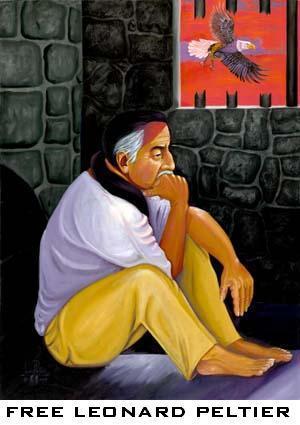
Those good souls deserve far more respect and consideration than the swaggering politicians and upstanding citizens who toss pennies, platitudes, and criminal sanctions at the poor when they beg on the sidewalk and make up new life stories - lies to justify their existence - on signs at freeway exits.

It isn't that I don't see the bigger picture. It's that I've been riveted to thousands of tiny pieces through the years, an intimate observer to so many tortured minds and shattered lives, and I know it doesn't have to be that way. No one "deserves" to be thrown away. It is us, not so much "them", who need to change. Perhaps then we will finally elect a government that represents the heart of The People instead of the financial interests of the petty, selfish, Privileged Few.

"An Invisible Woman is Laid to Rest"

Ed Montini's column for today.


For most of her adult life, 48-year-old Marcia Powell was invisible. Then she died, and slowly came into view.

If you were required in school to read H.G. Wells' science fiction masterpiece "The Invisible Man" you'll recall that the troubled scientist called Griffin formulated a recipe for invisibility that, we learn tragically, wears off after death.

As it turns out, the same holds true in real life.

The diabolical concoction that lead to Marcia Powell's invisibility was a mixture of mental illness, drugs and ignorance. (Ours, not hers.)

Today, At Shadow Rock United Church of Christ in Phoenix, Powell will be laid to rest. She was a troubled adopted girl when she first ran away from home in California.

She showed early signs of mental illness. But as a young adult with no family – or at least none that wanted any part of her – “treatment” took the form of self medication by way of everything from alcohol to methamphetamine. To pay for it, she became a prostitute.

Mental illness is not a crime. Most of those who suffer from the disease are able to keep it under control and function perfectly well with the help of doctors and prescription drugs.

Powell and many others are not as fortunate.

Left on their own they spiral into homelessness, petty crime or worse.

After offering oral sex to an undercover police officer in exchange for a few dollars Marcia Powell found herself in what has become one of Arizona's largest de facto mental health facilities – state prison.

It wasn't the first time she was behind bars. Or the second. Or the tenth. Powell had been in and out of jail for decades, all of which went unnoticed by you and me. She and those like her roam our streets, alleys, parking lots and city parks in plain view but unseen, shrouded by their delusions and our indifference.

All of which changed for Powell when she was placed in a cage-like outdoor enclosure at the prison in Perryville and left to cook for four hours. Invisible. Forgotten.

It was only after she fell into a coma and died that any of us learned she had been alive.

Even now, as the Department of Corrections investigates what went wrong, it is the manner of her death that concerns us. Not her life.

Ken Heintzelman, pastor at Shadow Rock, told me, “It's unfortunate that it sometimes take a spiritual kick in the pants to make us stop and see what is going on. Maybe through Marcia we can address some of the systematic things that caused this to happen to her. It's more than simply about this one person. It's about what kind of society we want to be.”

The Maricopa County Public Fiduciary's office spent weeks trying to find relatives of Powell. The only family members they found were even less interested in her after death than they had been while she was alive.

So burying Powell fell to some good-hearted local people, including folks at Shadow Rock, at EncantoCommunityChurch, at Hansen's Mortuary and at the fiduciary's office.

Most, like Donna Hamm, executive director of Middle Ground Prison Reform, only heard of Powell after she was gone.

While helping to plan Powell's funeral Hamm told me, “We believe that Marcia deserves a little dignity, something she didn't get while alive.”

If all goes according to plan, Powell's cremated remains will be placed in a niche at Shadow Rock sometime around dusk on Sunday.

The church is located south of Thunderbird Road on Eighth Avenue. The desert landscape rises up like a wave behind the building, cresting at the edge of an unending sky. It's an open, airy place. No prison cells. No barbed wire. No cages.

(Column for June 28, 2009, Arizona Republic)

Tuesday, June 9, 2009

Montini: Marcia's Life Mattered

Here's the latest from Ed Montini at the AZ Republic.

Thanks, Ed.

Imagine fury if inmate had died while on Arpaio's watch

The gruesome passing of inmate Marcia Powell a few weeks back has proved that in Arizona it doesn't matter how a convict dies, only where.

Powell would have been national and international news if she had died in one of Sheriff Joe Arpaio's much discussed jails.

But she didn't. She was in a state prison.

If the chain-link fence enclosure into which Powell was placed and left in the hot sun for four hours had been in Tent City instead of the Perryville prison complex, Amnesty International would have contacted the U.S. State Department about the worse-than-Guantanamo conditions. But there was no great protest.

If a mentally ill person like Powell had been subjected to the same treatment in Arpaio's jail as she had been in prison, I have no doubt that the American Civil Liberties Union, and who knows what other human-rights organizations, would have been up in arms, raising a stink among politicians on every level.

But Powell died in a state prison, and there was no political uproar.

Imagine the amount of media attention Powell's death would have received if the decision to unplug her from life support had been made by Sheriff Arpaio rather than by Department of Corrections Director Charles Ryan.

Imagine the level of indignation that would have arisen if it was learned later that Arpaio had decided to pull the plug without notifying Powell's legal guardian at The Maricopa County Fiduciary’s Office.

Instead, it was Ryan who said that his department had exhausted all the leads that it had concerning Powell's next of kin.

However, the fiduciary has been Powell's guardian since 2008. Not only that, but last week the fiduciary's attorney reported in court that several of Powell's estranged relatives had been located and others might yet be found.

Imagine if it had been Arpaio who had cut off life support on such an inmate only to discover that there might be family connections out there.

But it was not Arpaio who did these things. It was the DOC, and so news coverage has been limited mostly to a few articles and online reports in The Arizona Republic and the weekly Phoenix New Times.

Imagine, finally, the level of public outrage that would have been raised if Powell had died in one of Arpaio's jails and Arpaio announced that his department, rather than an outside agency, would conduct the criminal investigation into what happened.

I doubt that there would be enough paper available to print the onslaught of angry letters or enough computer space to contain the barrage of missives over the Internet.

But in this case it was the DOC announcing that it would investigate itself (with a recent promise to allow the Department of Public Safety to look over its findings) and there was no reaction.

Instead, from the moment Powell's death became public I've received comments from readers who say they aren't sympathetic to her plight because she made poor choices in life.

Yet here we are, choosing to make less of Powell's death, not just because of who she was but because of where she died.

More than anything, Powell's death demonstrates that celebrity trumps circumstance. Without a name like Arpaio's to serve as a lightning rod there is no public interest in her case.

Marcia Powell was 48 years old. Her mental disorders stretch back for decades. She was a prostitute and drug addict who wound up behind bars because prison has become the place we lock up some of the mentally ill.

That's her excuse. What's ours?

Reach Montini at 602-444-8978 or ed.montini@arizonarepublic.com

Sunday, May 24, 2009

The Scoop from Montini

Shortly after my last post I found Ed Montini's column today in the AZ Republic, a paper I otherwise seldom read. It's useful insofar as he filled in some blanks about Marcia's history, pointed to some of the failures in our system, and articulated outrage that our community expressed more distress and anger about the death of a police dog at Perryville (scroll halfway down the linked page for Rik's story) under similar environmental conditions than about Marcia Powell's life or death.

I have other thoughts on the language of the article, but am for the most part relieved to see it, and to see how many writers responded with empathy and outrage, rather than the usual absurd flippant remarks (don't even bother looking at the Fox News reader comments...I just needed to see who was out there). I'd echo Montini's call for citizens to contact the Governor and demand an independent investigation. Contact your legislators too - especially if they're Republicans.

A final note on Montini's comments: According to Donna Leone Hamm of Middle Ground Prison Reform, she tried to talk to the press and ADC in 2007 about the practice of caging prisoners outside - no one was interested because no one had yet died (though such deaths have occurred in other prisons). Let's make sure that Marcia counts as someone whose life was at least as important as Rik the dog's.